2026 Best Garbage Bags for Bulk Buyers?
Choosing the best Garbage Bags for bulk purchasing requires more than comparing roll prices. It requires evidence, field experience, and a clear understanding of daily waste conditions.
The U.S. Environmental Protection Agency reported 292.4 million tons of municipal solid waste generated in 2018. That figure shows why bag strength, leak resistance, and reliable sizing matter across facilities. The World Bank’s What a Waste 2.0 report also estimated global waste could reach 3.40 billion tonnes annually by 2050. Demand will keep rising. Small details matter.
For 2026, bulk buyers should assess puncture resistance, seal quality, recycled content, dispenser compatibility, and storage performance. A thick bag is not automatically the best bag. Material quality, drawstring construction, and actual load conditions can matter more. ASTM D6400 and EN 13432 may help buyers evaluate compostable claims, but certification should be verified directly. Marketing language alone is not enough.
This guide compares Garbage Bags for offices, hotels, restaurants, warehouses, healthcare support areas, and industrial facilities. It considers independent product specifications, supplier documentation, user experience, and cost per usable bag. Prices and packaging quantities can change. So can regional requirements. No ranking fits every operation. A bag that performs well with cardboard may fail around wet food waste. That limitation deserves attention. The goal is not to promote the thickest option, but to identify dependable choices that reduce leaks, unnecessary replacements, and purchasing surprises. Proper testing remains essential before committing to pallet-level orders.
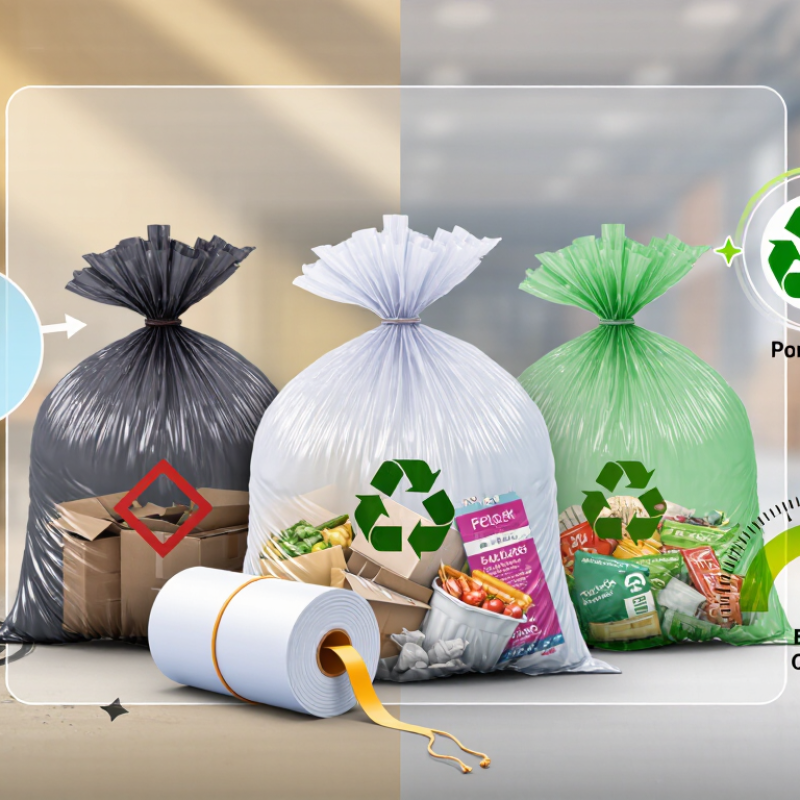
Garbage Bag Types and Their Best Bulk-Buying Applications
In 2026, bulk garbage bag buying works best when waste type, container size, and collection frequency are assessed together. Low-density polyethylene bags suit bulky, lightweight waste, including packaging, leaves, and empty cartons. They stretch around irregular shapes and reduce splitting during routine collection. High-density bags feel thinner but resist punctures from dry, sharp-edged waste. They fit offices, washrooms, and lined bins with predictable loads. Thickness alone does not prove quality. Bag dimensions and seam strength matter too.
For food-service areas, choose liners with reliable leak resistance and enough height to fold over the rim. Wet waste needs stronger seals, especially when bags remain overnight. Compostable options may suit approved organic-waste programs, but local processing rules require checking before a large order. Clear bags support visible sorting in warehouses and events. Opaque bags offer privacy for general refuse. Color coding can reduce mistakes, yet inconsistent staff training weakens the system. It happens.
Large facilities should compare bags through a controlled trial. Measure filled weight, punctures, leakage, tie-off time, and storage space. Test several loads, not one convenient shift. A small sample can hide problems. For construction cleanup, reinforced bags or heavy-duty liners suit dense debris better. Sharp materials still require proper handling. Bulk buyers should inspect carton protection and lot consistency. A low unit price becomes expensive when workers double-bag or clean spills. Review actual usage monthly, because seasonal waste can change the best choice.
Key Specifications for Comparing Bulk Garbage Bags in 2026
Bulk buyers need specifications, not attractive claims. The U.S. EPA reports 292.4 million tons of municipal solid waste generated in 2018. That volume creates very different bag demands across kitchens, warehouses, and construction sites. Start with capacity, measured in gallons or liters, and confirm the usable fill level. A 60-gallon bag may fail when packed tightly to the rim. A safer purchase compares thickness, puncture resistance, tear strength, and seal performance together.
Film thickness is only one indicator. ASTM D1709 measures impact resistance, while ASTM D2582 evaluates tear propagation. Ask suppliers for test methods and results, not just “heavy duty” wording. Recycled-content claims should identify the percentage and material source. The Federal Trade Commission advises clear, substantiated environmental marketing claims, which helps reduce misleading purchasing decisions. Check resin type, gauge consistency, closure design, carton count, and storage limits. Heat and sunlight can weaken stored film.
Small details matter.
In field evaluations, a bag with stronger seams can outperform a thicker bag with poor sealing. I would also inspect samples using wet, sharp, and uneven loads before ordering pallets. This step costs time, but rejected cartons cost more. ASTM results support comparison, yet they do not perfectly reproduce every workplace. That is the uncomfortable part. Supplier data needs practical verification, especially when waste contains liquids or corners. A reliable bulk specification should state dimensions, thickness tolerance, load expectations, test standards, recycled content, and replacement terms in writing.
How to Evaluate Suppliers, Pricing, Packaging, and Custom Orders
For bulk buyers, the best garbage bags begin with a dependable supplier, not the lowest quotation. Ask for factory details, production capacity, quality records, and recent test reports. Request samples from the same material and production line used for your order. Check thickness with a micrometer, then test seams, handles, and puncture resistance. A heavy-looking bag can still fail at the bottom.
Compare the full landed cost. Include unit price, tooling, freight, customs charges, storage, and expected waste. A supplier offering cheap bags may use thinner material or weaker seals. Ask for pricing at several quantities, such as one pallet, five pallets, and a full container. Payment terms and lead times matter too. Delayed stock can cost more than a higher purchase price.
Packaging deserves close attention. Confirm roll count, carton dimensions, pallet height, labels, and moisture protection. Clear packing details prevent receiving errors and warehouse congestion. For custom orders, define bag size, color, thickness, closure style, printing, carton artwork, minimum order quantity, and acceptable tolerances. Approve a pre-production sample in writing. Leave room for honest review. No supplier check is perfect, and one missed detail can affect thousands of bags. Some buyers also overlook seasonal capacity, which may change delivery dates.
2026 Best Garbage Bags for Bulk Buyers: Product Specification Benchmarks
Compare common commercial bag specifications before evaluating supplier pricing, packaging efficiency, and custom-order requirements. Thicker bags generally support heavier loads, while lower bags-per-case can increase packaging and logistics costs.
Benchmark ranges reflect commonly published commercial specifications. Confirm actual thickness, dimensions, resin composition, case quantity, minimum order quantity, lead time, and custom-printing options directly with each supplier.
A Practical Selection Guide for Different Commercial Waste Needs
2026 Best Garbage Bags for Bulk Buyers?
Choosing commercial garbage bags starts with the waste, not the advertised thickness. Office bins usually need lightweight, high-density bags for paper and packaging. Restaurants require stronger low-density bags with reliable leak resistance. Wet food scraps expose weak seams quickly. Construction sites need puncture-resistant bags with gussets for bulky, uneven debris.
Measure each bin before ordering in bulk. The bag should reach over the rim without excessive stretching. Check capacity, dimensions, seal quality, and case count together. A 60-liter bag may not fit a 60-liter container when the bin is wide and deep. That small mistake creates daily handling problems. Test a sample case first.
Material choice also affects cost. Thicker bags are not automatically better. They can waste plastic when the load is light, while thin bags may split under sharp edges. For mixed commercial waste, balanced film strength often performs better than maximum thickness. Clear bags can improve sorting visibility, but dark bags hide contents and stains. Some purchasing teams focus only on unit price. That is incomplete. Track failures, replacement use, leakage, and worker complaints for several weeks. Real performance may challenge the original specification. Even experienced buyers should review seasonal changes, because summer moisture and holiday waste can alter bag requirements.