
2026 Top Types of Vacuum Seal Pouches for Global Buyers

Choosing the right Vacuum Seal Pouches has become more complex for global buyers in 2026. Packaging must protect products, control costs, and support efficient international distribution. A pouch that works for fresh salmon may fail with sharp bones, oily sauces, or frozen vegetables. Small details matter.

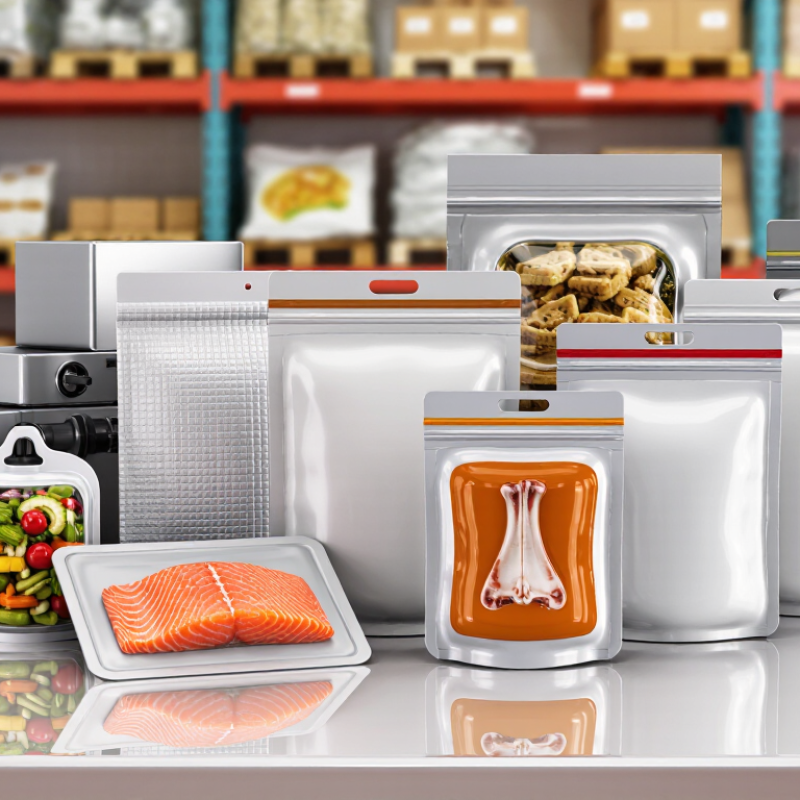
This guide examines the main pouch types, including embossed, smooth, boilable, retort, freezer-grade, and recyclable structures. Each option serves a different combination of product, machine, temperature, and shelf-life requirements. Embossed pouches often support household external vacuum machines. Smooth pouches usually suit chamber machines and commercial production lines. Retort pouches tolerate demanding heat-processing conditions, but they require carefully validated materials and seals.

Performance depends on more than film thickness. Buyers should review oxygen transmission, water vapor resistance, puncture strength, seal width, print quality, and storage temperature. A clear pouch can also improve product visibility at retail. A weak seal can ruin an otherwise excellent package.

This guide emphasizes practical evaluation rather than attractive specifications alone. It considers supplier documentation, sample testing, traceability, and compliance with applicable food-contact or product-safety requirements. Regional standards differ, so buyers should verify current rules with qualified local specialists. No single pouch is best.

That matters.

Even experienced purchasing teams can overlook machine compatibility or transport conditions. A better decision comes from testing filled samples under realistic pressure, handling, and storage scenarios. The following overview helps global buyers compare pouch types with greater confidence, while recognizing that packaging choices should remain measurable, documented, and open to review.
2026 Top Types of Vacuum Seal Pouches for Global Buyers

Vacuum Seal Pouches: Definition, Purpose, and Main Applications

Vacuum seal pouches are flexible barrier bags designed to remove air before sealing. They usually combine plastic layers that resist oxygen, moisture, punctures, and heat. The pouch shrinks tightly around its contents during evacuation. They are not ordinary bags. Their main purpose is to slow oxidation, reduce moisture exposure, and protect products during storage and transport. A reliable pouch must match the sealing temperature, vacuum strength, and product weight.

Common types include smooth pouches, embossed pouches, three-side-seal pouches, and retort-compatible pouches. Smooth structures suit chamber vacuum systems and offer an even sealing surface. Embossed designs help external suction machines remove air through textured channels. Retort structures tolerate controlled heat after sealing, but they require careful material selection. I have found that seal width matters more than many buyers expect. A narrow, uneven seal can fail even when the film looks strong.

Applications range from meat, seafood, cheese, coffee, and dried foods to medical supplies and industrial components. Vacuum packaging can reduce freezer burn and keep portions cleaner in cold storage. It also helps prevent dust and humidity from reaching metal parts. However, vacuum sealing is not suitable for every product. Soft produce may collapse, while sharp edges can puncture the film. One detail is easy to miss. Buyers should test pouch size, barrier performance, seal integrity, and storage conditions before large orders. Packaging performance depends on the entire process, not the pouch alone.

Material Structures Used in Modern Vacuum Seal Pouches

Material Structures Used in Modern Vacuum Seal Pouches

Modern vacuum seal pouches use layered films to protect food, medical supplies, and industrial components. Each layer has a specific job. The outer polyester layer adds printability and stiffness. A polyamide layer improves puncture resistance during handling. The inner polyethylene layer melts evenly and creates the seal. This structure works well for products with sharp edges or heavy moisture.

For longer shelf life, buyers may choose high-barrier structures with EVOH or metallized film. These layers reduce oxygen and light transmission. They help preserve color, aroma, and texture. However, barrier performance depends on pouch thickness, sealing temperature, and storage conditions. A strong film can still fail if the seal is contaminated. Real production results often differ from laboratory data.

Tips

Ask for the complete material structure, not only the total thickness. Check oxygen transmission, water vapor transmission, seal strength, and puncture resistance.

Request samples that match your actual product. Test them after freezing, transport, and repeated handling.

A pouch that performs well on a clean factory table may struggle in a humid warehouse.

Seal settings also need adjustment; one temperature rarely fits every film structure.

Some buyers focus heavily on barrier values and overlook opening convenience. That is a practical mistake worth reconsidering.

Top Vacuum Seal Pouch Types for Different Global Products

2026 Top Types of Vacuum Seal Pouches for Global Buyers

Top Vacuum Seal Pouch Types for Different Global Products

For global buyers, pouch selection should follow the product, transport route, and filling process. One material cannot suit every market.

Fresh meat and seafood need strong, puncture-resistant pouches with reliable seals. Bone-in cuts can damage weak films during handling. Frozen products also need moisture resistance and flexible performance at low temperatures. Clear pouches help inspection, but darker packaging can protect light-sensitive foods.

Dry foods, coffee, grains, and powders often use lightweight, high-barrier pouches. Their structure should limit oxygen and moisture entry. Fine powders require a clean seal area, because small particles can create leaks. Retort pouches suit heat-processed foods, but only when the full package is tested for thermal stress.

Delicate produce needs caution. Strong vacuum pressure can crush soft items or change their appearance. Breathable packaging may work better for selected products. Industrial parts may require tough pouches with abrasion resistance and corrosion protection. Sharp edges need internal wrapping or reinforced film.

A common mistake is judging pouches by appearance alone. Seal strength, oxygen transmission, water vapor protection, and drop performance matter more. Food-contact compliance must match the destination market. A pouch that performs well in a dry warehouse may fail during humid ocean transport. Testing should include real product weight, temperature changes, stacking, and handling. No specification is perfect. Reviewing actual shipment failures can improve the next purchase.

How to Select Pouches by Barrier, Size, Closure, and Equipment

2026 Top Types of Vacuum Seal Pouches for Global Buyers

Pouch selection starts with the product, not the packaging trend. High-fat foods often need stronger oxygen and light barriers, while dry goods may need moisture protection first. The UNEP Food Waste Index Report 2024 estimates that 1.05 billion tonnes of food were wasted in 2022. Better sealing cannot solve every loss, but it can protect freshness during storage and transport. For barrier performance, request oxygen transmission rate and water vapor transmission data. Test the actual pouch, not only the film specification. ASTM methods can support comparable results.

Tips: Match pouch size to fill weight. Leave enough headspace for sealing. A pouch that looks economical may waste film and warehouse space. Choose flat pouches for efficient stacking, stand-up pouches for shelf display, and retort-compatible structures only when thermal processing requires them. Zippers improve reuse, but they do not replace a reliable primary seal. Closure choice should reflect opening frequency, dust exposure, and customer handling.

Equipment compatibility is often overlooked. Check sealing-jaw width, vacuum chamber dimensions, film thickness, and cycle speed before ordering. PMMI packaging reports continue to identify automation and flexible formats as important investment areas, but faster equipment can expose weak seals quickly. I have seen attractive pouches fail because the seal area caught product particles. That mistake is avoidable. Ask suppliers for seal-strength testing, leak testing, migration documentation, and production samples. A perfect pouch rarely exists; the best choice balances barrier, dimensions, closure, machinery, and verified performance.

International Buying Factors: Standards, Customization, and Supply Reliability

International buyers now evaluate vacuum seal pouches beyond price and appearance. Smithers’ flexible packaging research projects the global market to exceed US$300 billion by 2028. This scale increases supplier choice, but also increases quality variation. Buyers should request ISO 9001 records, food-contact declarations, and traceable batch numbers. ASTM F88 seal-strength results and ASTM D3078 leak-testing data provide more useful evidence than attractive samples. A certificate alone is not enough.

Material selection must match the product and supply route. A 90-micron nylon and polyethylene structure may suit frozen foods, while high-barrier films better protect dry products from oxygen and moisture. Ask for oxygen transmission rate, water-vapor transmission rate, puncture resistance, and seal-window data. Custom dimensions, rounded corners, tear notches, and printed registration marks can reduce waste. However, every added feature may increase tooling costs or minimum order quantities. That trade-off is often underestimated.

Supply reliability needs measurable controls. A 2024 industry survey by PMMI identified labor, material availability, and production flexibility as continuing packaging concerns. Buyers should check dual-source material plans, lead-time history, corrective-action records, and pre-shipment inspection procedures. A practical trial might test 250 × 350 mm pouches through freezing, vacuuming, transport vibration, and repeated seal opening. Real performance can disagree with laboratory results. I would also require retained samples from each batch, because specifications sometimes look precise but remain incomplete.

Back to top