
China Top Stock Bulk Bags Suppliers for Global Buyers?
Choosing China Top Stock Bulk Bags Suppliers for Global Buyers requires more than comparing unit prices. Buyers need to examine fabric weight, safe working load, stitching, lifting loops, and liner options. A sample bag can reveal details a quotation cannot: uneven seams, stiff fabric, or loops that feel poorly finished. Small clues matter.
W. Edwards Deming, a recognized quality expert, is often associated with the principle, “Quality is everyone’s responsibility.” It applies to Stock Bulk Bags sourcing, too. Supplier quality depends on clear specifications, consistent production checks, and honest communication—not just a polished catalog. Ask for test records, sample approval, and written confirmation of bag dimensions and load requirements. Then check that the delivered goods match the approved sample. Do not assume they will.
This guide examines supplier selection, customization, quality control, and practical questions for export buyers. It also considers lead times, packaging details, and how to assess a supplier’s ability to repeat an order consistently. A low quote may still be useful. But only when its specifications are clear. No supplier can remove every risk; buyers should verify critical details before production and shipment. The uncomfortable part? A checklist cannot replace careful follow-up.
What Stock Bulk Bags Are and How They Are Used
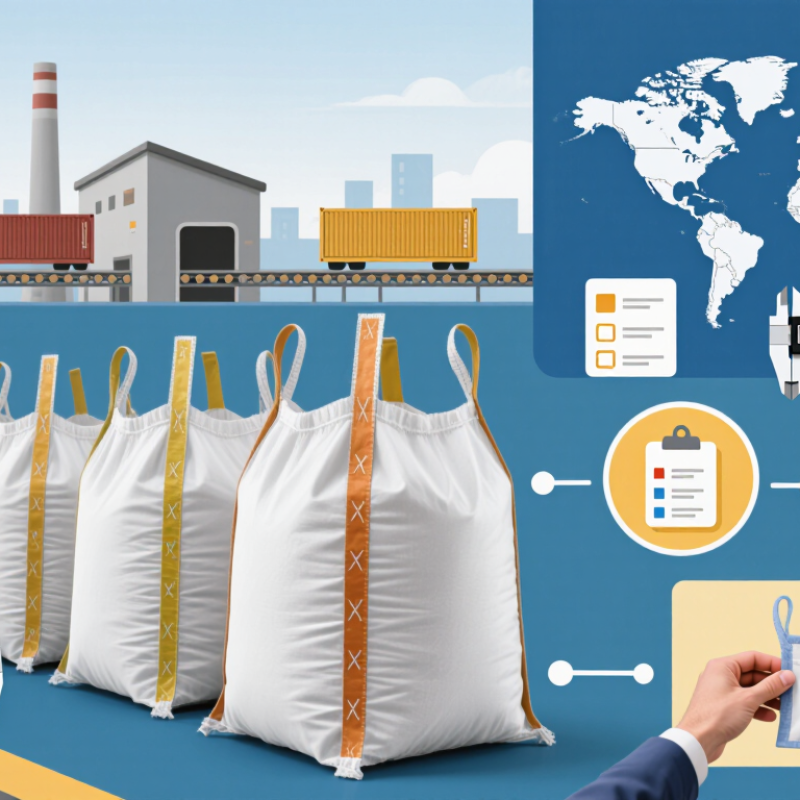
Stock bulk bags, also called flexible intermediate bulk containers (FIBCs), are ready-made woven polypropylene sacks for moving dry, flowable materials. They commonly hold grains, mineral products, plastic pellets, or powders. Many have sewn lifting loops and an open top or filling spout. Their bottom may be flat or fitted with a discharge spout, depending on the design.
The Flexible Intermediate Bulk Container Association (FIBCA) cites common safe working load ratings of about 500 to 4,000 pounds (227 to 1,814 kg); the bag’s own rating must guide use. ISO 21898:2004 sets requirements for FIBCs used with non-dangerous goods, including testing and marking. At a packing site, workers can fill a bag above a hopper, lift its loops with a forklift, and position it for transport. At the destination, a discharge spout can feed material into a process line.
Convenient, but not foolproof. A stock bag may not suit every product or handling setup. Fine powder can leak through unsuitable seams, while moisture-sensitive contents may need a liner. Check the safe working load, lifting instructions, and discharge design before filling. Those details are easy to miss when bags look similar on a warehouse floor.
China Top Stock Bulk Bags Suppliers for Global Buyers? - What Stock Bulk Bags Are and How They Are Used
| Stock Bulk Bag Type | Typical Construction | Common Size Range | Typical Safe Working Load (SWL) | Common Uses | Key Handling Considerations |
|---|---|---|---|---|---|
| Standard U-Panel FIBC | Woven polypropylene body formed from a U-shaped panel and two side panels; commonly supplied with lifting loops. | About 90 × 90 × 100–120 cm; other stock dimensions are available. | Often 500–2,000 kg, depending on the bag design and certification. | Dry, flowable goods such as grain, seeds, plastic resin, and some mineral products. | Check the SWL, filling and discharge configuration, and product compatibility before use. |
| Circular or Tubular FIBC | Body woven as a tube, usually with a base panel and lifting loops; construction may reduce side seams. | Commonly around 90–100 cm wide and 100–150 cm high. | Often 500–2,000 kg, subject to the specified design. | Granular or powdered materials, including agricultural and industrial products. | Choose the dimensions and fabric characteristics to suit the material’s flow and density. |
| Four-Panel FIBC | Made from four body panels and a base panel; designed to retain a more square shape when filled. | Commonly about 90–105 cm wide and 100–150 cm high. | Often 500–2,000 kg, depending on the model. | Materials that benefit from stable stacking and efficient use of pallet or warehouse space. | Confirm the filled dimensions and stacking suitability for the intended storage conditions. |
| Conductive Type C FIBC | Woven from conductive or interconnecting threads designed to dissipate static electricity when properly grounded. | Available in a range of standard FIBC dimensions; size depends on the product and filling system. | Set by the bag’s rated SWL; commonly selected within standard FIBC load ranges. | Applications where flammable dusts or vapours may be present and a suitable static-control system is required. | Must be grounded during filling and emptying. Follow the manufacturer’s instructions and site safety assessment. |
| Static-Dissipative Type D FIBC | Made with fabric designed to dissipate static charge without a grounding connection, when used as specified. | Available in various stock dimensions; confirm the exact specification before ordering. | Set by the bag’s rated SWL and design. | Selected bulk-handling operations requiring static-control properties. | Use only under the conditions stated by the manufacturer; assess the material, environment, and process hazards. |
| Food-Contact FIBC | May use virgin polypropylene fabric and a liner or protective packaging; suitability depends on the complete bag specification. | Commonly offered in standard dimensions such as approximately 90 × 90 × 100–120 cm. | Varies by construction; check the bag label and technical data sheet. | Food ingredients and other products requiring packaging that meets the buyer’s applicable food-contact requirements. | Request relevant compliance documents and confirm cleanliness, liner type, and storage conditions. |
| FIBC with Discharge Spout | Bulk bag fitted with a bottom outlet spout for controlled emptying; can be combined with different body styles. | Dimensions vary; spout diameter and length should match the discharge equipment. | Commonly within the rated range of the selected FIBC, often 500–2,000 kg. | Powders and granules that need metered or controlled discharge into processing equipment. | Keep the spout secured during transport and confirm that the outlet can be safely accessed and closed. |
Note: These are general examples, not universal specifications. Actual dimensions, capacity, safety factor, fabric, liner, and certification vary by bag design and supplier. Verify the marked SWL and handling instructions before filling, lifting, transporting, or stacking any bulk bag.