
China Top 10 Box Manufacturing Machine Manufacturers?

China is a major source of packaging equipment, but choosing a supplier takes more than comparing prices. A Box Manufacturing Machine may handle corrugated board feeding, printing, slotting, die-cutting, folding, or gluing. The right configuration depends on box dimensions, board grade, order volume, and the space available on your factory floor. Small details matter. A line rated for high output may still be a poor fit if changeovers take too long or local technicians cannot service it promptly.

This guide introduces ten Chinese manufacturers and the equipment they offer, with practical factors to consider when comparing them. These include machine type, automation level, customization options, stated production speed, component availability, and after-sales support. Treat specifications as starting points, not guarantees: actual output can vary with materials, operators, and product design. Ask suppliers for recent references, sample runs using your board, and clear information about installation and maintenance. Fit matters.

No ranking can suit every packaging business, and a shortlist may overlook a capable regional supplier. That limitation is worth keeping in mind. Use the profiles to shape questions, then verify current specifications and service arrangements directly with each manufacturer before making a purchase decision.
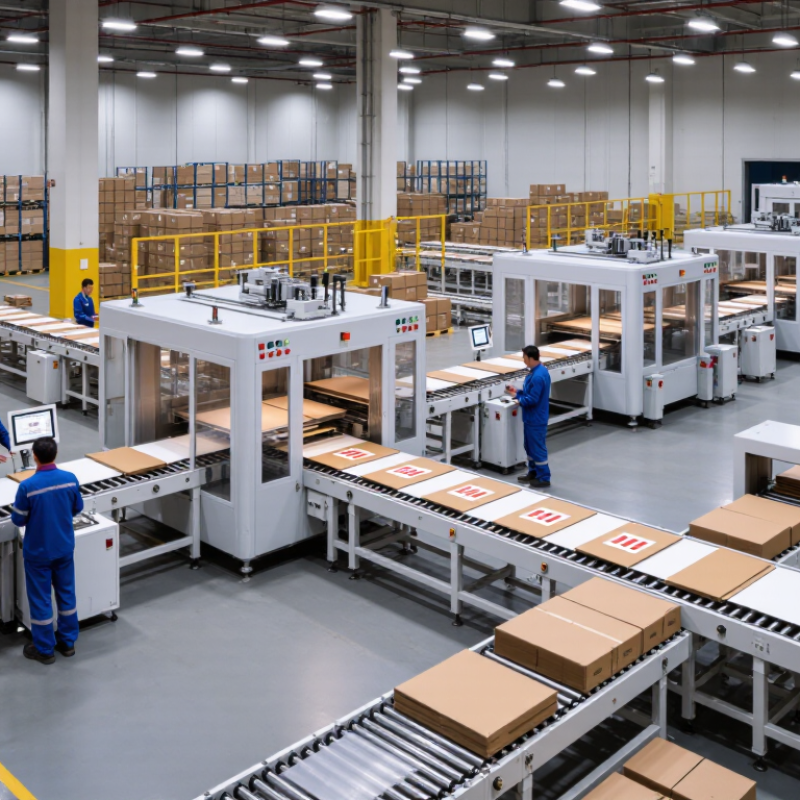
China Top 10 Box Manufacturing Machine Manufacturers?

What Box Manufacturing Machines Do and Where They Are Used

Box manufacturing machines turn paper rolls and sheets into protective containers. A corrugator bonds fluted paper between flat liners, creating board with useful cushioning and stacking strength. Operators monitor heat, adhesive spread, and web tension because small changes can affect bonding. Moisture matters. Too much can soften board; too little may make it brittle.

Converting equipment shapes that board for specific packaging jobs. Slitter-scorers trim it to width and add fold lines, while slotters cut the openings needed to form box flaps. Flexographic printers apply shipping marks or simple graphics directly onto the sheet. Die-cutters handle more complex outlines, such as display trays. Folder-gluers then fold and join panels, often using adhesive or staples. Not every line runs smoothly. Setup, board grade, and print requirements can change the pace.

These machines serve food producers, appliance makers, warehouses, and online retailers. A produce box may need ventilation holes, while an electronics carton may require precise dimensions and sturdy corners. Smaller workshops often use separate machines for flexible, short production runs; high-volume plants may connect equipment into automated lines. Automation can improve consistency, but it still needs trained operators and regular checks. A practical choice depends on box style, output needs, available floor space, and the skill level of the team.

Key Criteria for Evaluating Chinese Box Machine Manufacturers

Choosing a Chinese box-making machine manufacturer requires more than comparing quoted line speeds. FEFCO’s 2022 European Database Report records 95.4 billion square metres of European corrugated-board production. That scale makes consistent output and quality important.

Ask suppliers to demonstrate the machine with your board grade, flute profile, and box dimensions. A witnessed trial is more useful than a brochure figure. Measure usable output, changeover time, waste, and dimensional variation.

Assess the engineering and support behind the machine, too. Request component specifications, maintenance intervals, spare-parts lead times, and written service response targets. Check how operators access rollers and clear jams; a cramped service area can slow routine work. Review electrical documentation and safety provisions for your installation and destination market. Agree on acceptance tests and performance conditions before ordering.

Small details matter. A supplier’s stated maximum speed may not reflect a full shift on your stock.

Tips: Bring your own board and print files to the factory trial. Record settings, defects, and changeover time. If testing is not possible, treat performance claims as unverified and ask for comparable production records.

Profiles of Ten Leading Box Manufacturing Machine Manufacturers in China

China’s box-making equipment sector includes manufacturers with very different strengths. These ten profiles describe common supplier specializations, not a verified ranking. Full-line corrugator builders supply equipment from paper feeding to sheet cutting. Flexo folder-gluer makers focus on printing and forming corrugated cases. Rotary die-cutter specialists handle high-volume shaped packaging. Flatbed die-cutting manufacturers suit varied designs and smaller production runs. A useful distinction.

Automatic folder-gluer makers serve folding-carton plants that need consistent seams and faster output. Digital carton-printing equipment manufacturers support short runs and frequent artwork changes. Case-maker specialists combine printing, slotting, folding, and gluing for shipping boxes. Carton stitching and gluing equipment suppliers address different closure needs. Details matter.

Some manufacturers concentrate on line automation, including conveyors and stackers that reduce manual handling. Others specialize in retrofits, spare parts, and service for existing machines. Buyers should compare sample quality, changeover time, safety features, and local technician availability. Ask for a live production trial, not only a polished demonstration. A neat specification sheet can still hide a weak handover. Claims about speed also need context: board grade, operator skill, and job complexity all affect real output. Even these profiles cannot replace a careful factory visit.

China Top 10 Box Manufacturing Machine Manufacturers? - Profiles of Ten Leading Box Manufacturing Machine Manufacturers in China

The profiles below describe ten common equipment-specialist categories found in China’s box-making machinery market. They are not named companies or a verified ranking; machine configurations and capabilities vary by model and supplier.

Profile Equipment Specialization Typical Box Applications Main Production Operations Buyer Evaluation Points
Profile 1 Corrugated board production lines Shipping cartons and corrugated packaging Corrugating, laminating paper layers, slitting, and cutting board sheets Line configuration, flute options, working width, changeover requirements, and integration with downstream equipment
Profile 2 Flexographic printing and slotting machines Printed corrugated shipping boxes Printing, creasing, slotting, and box-blank preparation Number of print units, registration control, format range, setup time, and compatibility with the intended board grades
Profile 3 Rotary and flatbed die-cutting machines Die-cut corrugated cartons and shaped packaging Cutting and creasing blanks with a configured die Supported sheet size, die format, feeding method, waste removal, and changeover needs
Profile 4 Folder-gluer machines for corrugated board Regular slotted cartons and other glued corrugated boxes Folding, adhesive application, and compression of glued joints Box style range, glue system, feeding stability, adjustment time, and required operator involvement
Profile 5 Carton stitching and combination stitching-gluing machines Heavy-duty corrugated cartons and large-format cases Joining carton flaps with stitching, adhesive, or both Supported board thickness, stitch pattern, joint strength requirements, and whether stitching or gluing is preferred
Profile 6 Paperboard printing and die-cutting equipment Folding cartons for consumer goods, food, and retail packaging Printing and cutting or creasing paperboard blanks Sheet-size range, substrate compatibility, registration, finishing requirements, and production workflow
Profile 7 Paperboard folder-gluer machines Straight-line, crash-lock-bottom, and other folding cartons Folding carton blanks and gluing selected seams Supported carton styles, glue application control, folding accuracy, and minimum or maximum blank dimensions
Profile 8 Lamination and mounting machines Printed corrugated boxes and laminated paperboard packaging Bonding printed sheets or liners to a corrugated or paperboard base Material compatibility, sheet alignment, adhesive method, drying conditions, and downstream handling needs
Profile 9 Rigid-box forming equipment Gift boxes, presentation boxes, and other wrapped rigid boxes Forming box bases and lids, applying adhesive, and wrapping board with decorative paper Box dimensions, corner-forming method, wrapping material range, changeover requirements, and automation level
Profile 10 Paper box and paper food-container forming machines Paperboard trays, cartons, and selected disposable food containers Feeding blanks, forming shapes, and sealing or bonding joints, depending on the machine design Intended container type, paperboard specification, forming method, sealing requirements, and applicable food-contact standards

Comparing Product Range, Automation, and After-Sales Support

Comparing China’s top ten box machinery manufacturers requires more than a price check. Product range matters: can one supplier cover printing, slotting, die-cutting, folding, and gluing, or only selected stages? A broader range may simplify line integration, but it can also mean uneven expertise across machines. Ask to see production samples and changeover records, not just a showroom demonstration.

Automation claims deserve the same scrutiny. The International Federation of Robotics reported 276,288 industrial robot installations in China in 2023, about 51% of global installations. This signals a strong automation ecosystem; it does not prove that any individual box machine is highly automated. Compare automatic setup, job-change time, waste rates, and inspection functions under your own board grades and order sizes. Small details count. A fast line that needs repeated manual corrections may not be efficient.

After-sales support can decide whether a technically strong machine stays productive. Check commissioning scope, spare-part availability, remote diagnostics, and the promised response time for on-site service. Request service records or references from comparable installations. One uncomfortable point: “24-hour support” may mean an acknowledgement, not a repair. Define what counts as resolution, and confirm who pays for travel and replacement parts. Real operating conditions are messy, and vendor comparisons rarely capture every production interruption.

How to Choose a Manufacturer for Your Production Needs

Choosing a box manufacturing machine manufacturer starts with your actual production needs, not the largest speed claim. Define box dimensions, board grades, daily output, and available floor space. A machine that runs well on one board may struggle with another. Ask for a trial using your own material. Watch the feeder, print alignment, cutting accuracy, and finished-box consistency. Small details count. A crooked fold can cause trouble later.

Check how the manufacturer handles installation, operator training, spare parts, and service calls. Ask how quickly common components can be supplied, and get clear answers in writing. Visit a working factory if possible; look for tidy wiring, guarded moving parts, and operators who can explain routine maintenance. Request references from businesses with similar output and product types. Compare total operating costs, including setup time, waste, energy, and maintenance—not only purchase price. A perfect checklist does not exist. I would still leave room for a supervised production test, because brochures rarely show every awkward adjustment. Choose a supplier willing to discuss limitations as openly as capabilities.

Choosing a Box Manufacturing Machine Manufacturer: Capacity Planning Example

Compare a machine’s quoted rated speed with your production target—not just its maximum advertised speed.

Illustrative calculation: producing 60,000 boxes in an 8-hour shift requires 125 boxes per minute with no downtime. At an assumed 80% effective availability, the required rated speed is 156.25 boxes per minute (60,000 ÷ 480 minutes ÷ 0.80). These are scenario calculations, not manufacturer performance claims. When evaluating suppliers, also check speed for your board grade, box size, print configuration, changeovers, and service support.

Back to top