
Construction work produces waste in uneven bursts: broken tiles after one cut, timber offcuts by lunchtime, and dusty plasterboard near the end of the day. A Rubble Bag gives crews and homeowners a contained place to collect suitable debris without leaving loose material across a driveway or work area. That can make cleanup simpler, especially where a skip is impractical or the job is too small to justify one.
The right bag depends on the waste, the worksite, and how it will be collected. Check the manufacturer’s stated capacity and load limit, then consider the material’s weight and sharp edges. A bag that holds bulky packaging may not be appropriate for dense rubble. Keep debris within the bag’s limits, avoid overfilling it, and leave access clear for safe handling. Small details matter.
A sturdy rubble bag can help reduce scattered dust and fragments, but it is not a substitute for careful sorting or sensible lifting. Some collection providers restrict particular materials, so confirm their requirements before filling the bag. That step is easy to overlook. It is also where a good plan can fall short. This guide explores why a Rubble Bag may suit construction waste, what to check before choosing one, and how to use it more thoughtfully on site.
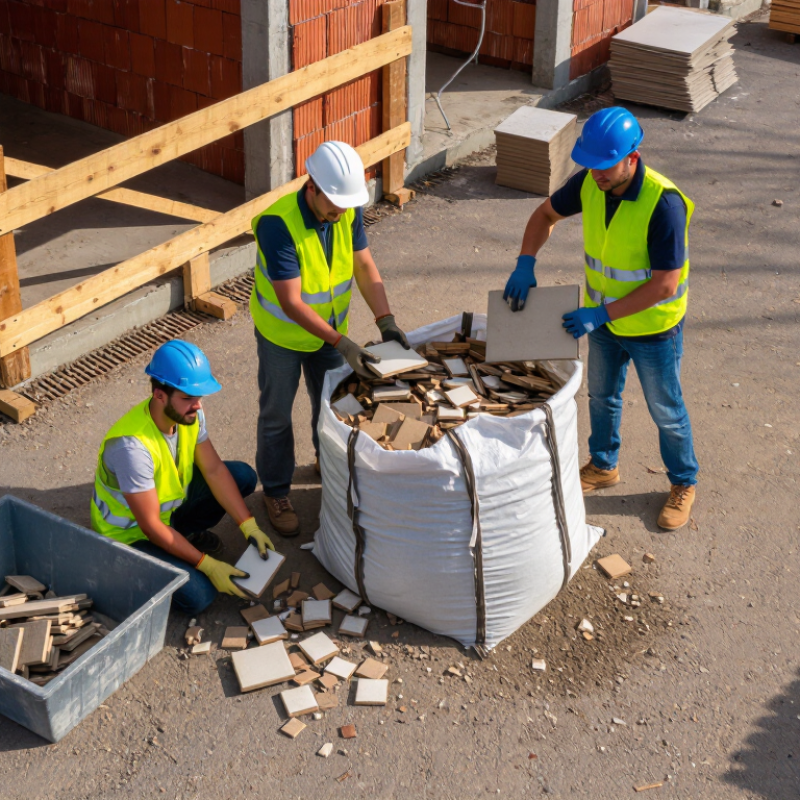
A rubble bag is a flexible container designed to hold broken concrete, bricks, tile, and other renovation debris. Its woven body can fold flat between jobs, while reinforced lifting loops help workers move a filled bag with suitable equipment. Check how the loops attach to the body; stitching and fabric strength matter as much as the bag’s shape. Small detail. A weak seam can become the failure point.
Most rubble bags use woven polypropylene, chosen for its balance of weight and tear resistance. Coated fabric may help limit dust and moisture, but it does not make a bag leakproof. Sharp edges can still cut or abrade the material, so placing jagged pieces carefully can reduce damage. In practice, mixed debris is harder on a bag than evenly sized rubble. That is easy to overlook.
Load capacity depends on the fabric, seams, lifting design, and stated rating. Compare the bag’s safe working load with the debris you expect to collect, and follow the manufacturer’s handling instructions. Concrete is especially dense; a bag that looks only half full may already be heavy. Do not assume volume equals weight. Inspect the bag before each use, and avoid lifting it if straps, seams, or fabric show damage. The rating is useful, but job-site conditions still deserve judgment.

Construction Waste Types Suitable for Rubble Bags
Rubble bags work well for smaller, sorted loads from renovation and repair projects. Suitable materials include broken tiles, plaster, drywall offcuts, timber scraps, and empty packaging. These pieces can be carried without a skip, provided the bag is designed for construction debris and remains within its stated load limit. Check the seams, too. A small tear can become a big mess.
Concrete, bricks, and paving fragments may also fit, but their weight adds up quickly. The US Environmental Protection Agency estimated that construction and demolition activities generated 600 million tons of debris in 2018; 455 million tons were directed to further use, while 145 million tons were landfilled (EPA, 2018). Those figures cover a broad waste stream, not just bagged material. They do show why separating clean, reusable rubble matters. Keep heavy masonry in small amounts, and avoid sharp pieces pressing against the bag’s sides.
Keep waste dry where possible, and don’t mix in liquids or materials your local collection service excludes. Bag capacity varies; volume is not the same as safe lifting weight. A bag that looks half-full can still be too heavy. It’s an easy detail to miss. EPA, Advancing Sustainable Materials Management: 2018 Fact Sheet.
Rubble bags can be a practical way to collect and move many renovation materials. Waste density helps explain why some materials reach a bag’s safe load limit much sooner than others.
Indicative loose bulk-density ranges: timber offcuts 150–350 kg/m³; plasterboard 250–450 kg/m³; mixed renovation waste 400–800 kg/m³; broken brick 1,000–1,600 kg/m³; soil 1,200–1,800 kg/m³; concrete fragments 1,300–1,900 kg/m³. Actual values vary with moisture, particle size, and compaction. Check the bag’s rated load and local disposal rules; dense waste can reach the limit quickly.
A rubble bag can solve a different problem from a skip bin: getting debris out of a tight work area without reserving a large patch of ground. On a narrow renovation site, a crew can place a bag near the cutting station, then move it when the work shifts. That can mean fewer trips carrying broken plaster or tile through finished rooms. Small detail, big difference.
The U.S. Environmental Protection Agency estimated 600 million tons of construction and demolition debris in 2018, more than twice the amount of municipal solid waste. That figure describes the scale of the waste stream, not the best container for every job. A bin suits bulky, heavy loads and steady access for collection. A rubble bag is often easier to stage where a truck cannot reach, and it takes up less room before use. It also avoids leaving an empty metal container on a small driveway. But capacity and safe lifting matter. A bag filled with wet soil, concrete, or sharp offcuts may become too heavy or tear. I would check the load limit and collection arrangements before filling it; that step is easy to overlook.
Source: U.S. EPA, 2018 Construction and Demolition Debris Estimates.
Choose a rubble bag that matches the waste, not just the job’s estimated volume. The US Environmental Protection Agency estimated that construction and demolition activities generated 600 million tons of debris in 2018—more than twice the amount of municipal solid waste. That scale makes sensible sorting and containment important. For dense brick or concrete, check the bag’s stated load rating and use a model designed for heavy rubble. Keep sharp edges away from seams. A small tear can become a large failure.
Before filling, inspect the fabric, handles, stitching, and base for cuts or wear. Place the bag on firm, level ground, then distribute debris evenly rather than piling it on one side. Leave room at the top so material cannot spill during handling. Not brim-full. Never lift by hand beyond what can be controlled, and use mechanical lifting only when the bag is rated for it. Keep people clear of suspended loads. The UK Health and Safety Executive advises assessing lifting tasks for load weight, posture, and handling conditions; those details are easy to overlook when a site is busy. I’d also check the waste collector’s acceptance rules before filling—the wrong mix can mean extra handling or a rejected pickup.
Rubble bags work well when a project produces manageable amounts of broken brick, plaster, or tile. Keep the bag close to the work area, but not where it blocks a doorway or walkway. Put dense material in gradually and spread it across the base. A bag can look half-full and still be too heavy to lift safely. Check its rated capacity and arrange suitable collection before filling it.
The scale of the problem is substantial. The US Environmental Protection Agency estimated that construction and demolition activities generated about 600 million tons of debris in 2018; its report estimated roughly 455 million tons were recovered for reuse or recycling. A rubble bag can help keep clean masonry separate from mixed waste, making sorting easier. But only when its contents stay uncontaminated. That distinction matters. Keep timber, packaging, soil, and hazardous materials out unless the waste contractor confirms they can be accepted together.
Before collection, close the bag as instructed and leave clear access for the vehicle. Confirm what the receiving facility accepts; rules and recycling options vary by location. A bag is not automatically the greener choice. If it is overloaded, poorly sorted, or sent to a facility without suitable recovery routes, convenience may outweigh its environmental benefit. Check the destination, not just the pickup date.
