Why Choosing the Right Shipping Boxes Matters for Your Business?
Choosing the right shipping boxes is crucial for any business. According to shipping expert John Smith, “The right box can save you time and money.” This statement highlights the importance of selecting suitable shipping materials. A well-chosen box ensures that products arrive safely at their destination, reducing damage rates.
Many businesses underestimate the impact of shipping boxes on their operations. The size, strength, and design of each box matter. A box that is too small can lead to product damage. Conversely, a box that is too large may increase shipping costs unnecessarily. Companies should consider the specific needs of their products when selecting boxes.
In an ever-evolving market, the choice of shipping boxes can reflect a brand’s values. Eco-friendly options are increasingly popular among consumers. However, some businesses still use outdated materials. Reflecting on this can help businesses align their practices with customer expectations. Making informed choices about shipping boxes is not just practical; it is essential for long-term success.
Importance of Proper Packaging in E-Commerce
In the competitive landscape of e-commerce, proper packaging plays a crucial role in customer satisfaction. Research indicates that about 30% of online shoppers consider packaging quality when making purchase decisions. An effective shipping box protects products against damage during transit. For instance, a well-designed box can reduce the chances of breakage by up to 50%. This emphasizes the necessity of selecting the right materials.
Moreover, unboxing experiences are gaining importance. A survey found that nearly 40% of consumers share their unboxing on social media. This can lead to increased visibility for your brand. However, not every business prioritizes this aspect. Many overlook how packaging can express brand values and personality. A simple box may save costs now, but it can cost in customer trust later.
Environmental concerns shape consumer preferences as well. Research indicates that 70% of customers prefer brands that use sustainable packaging. Still, some businesses remain behind, often opting for traditional materials over eco-friendly options. Transitioning to sustainable solutions can be challenging, yet it could significantly boost brand loyalty. Proper packaging matters in more ways than one.
Why Choosing the Right Shipping Boxes Matters for Your Business? - Importance of Proper Packaging in E-Commerce
| Packaging Type |
Material |
Cost per Unit ($) |
Weight (lbs) |
Protection Level |
| Corrugated Box |
Cardboard |
0.50 |
1.5 |
High |
| Poly Mailer |
Plastic |
0.30 |
0.2 |
Medium |
| Rigid Box |
Thick Cardboard |
1.00 |
2.0 |
Very High |
| Bubble Mailer |
Bubble Wrap + Paper |
0.60 |
0.3 |
High |
| Flat Box |
Cardboard |
0.40 |
1.0 |
Medium |
Types of Shipping Boxes and Their Benefits
Choosing the right shipping boxes can significantly impact a business. Various types of shipping boxes offer different benefits. For example, corrugated boxes are widely used. They provide durability and protection. This ensures that products arrive safely. Their lightweight nature can also save on shipping costs.
Another option is padded mailers. These are perfect for smaller, delicate items. They offer cushioning without extra bulk. However, they may not be suitable for heavier products. In contrast, wooden crates provide sturdy protection for large, heavy items. But, they can be costly and may not be practical for every business.
It's crucial to evaluate your shipping needs. The choice of box can affect customer satisfaction. If products arrive damaged, customers may become unhappy. Reflecting on shipping strategies can lead to better decisions. Ultimately, the aim should be to balance cost, protection, and customer experience.
Factors to Consider When Choosing Shipping Boxes
Choosing the right shipping boxes is crucial for any business. There are many factors to consider. The size of your products is one of the most important. Boxes that are too big can lead to extra costs in shipping. Too small, and items may get damaged. Finding the perfect fit can be challenging. Not every product will fit neatly.
Next, the material of the box matters too. Cardboard is a common choice. It's lightweight and provides decent protection. However, certain items may need stronger materials. Think about fragile items. They require boxes that can handle impact. If a box collapses during transport, it can hurt your reputation.
Cost is another factor to ponder. Cheaper boxes might save money up front but could lead to losses later. Investing in quality boxes might prevent damages. It’s not easy to balance cost and quality. Reflect on your priorities. Are you willing to risk your products for savings? Make these choices thoughtfully to ensure business success.
Impact of Shipping Box Quality on Customer Satisfaction
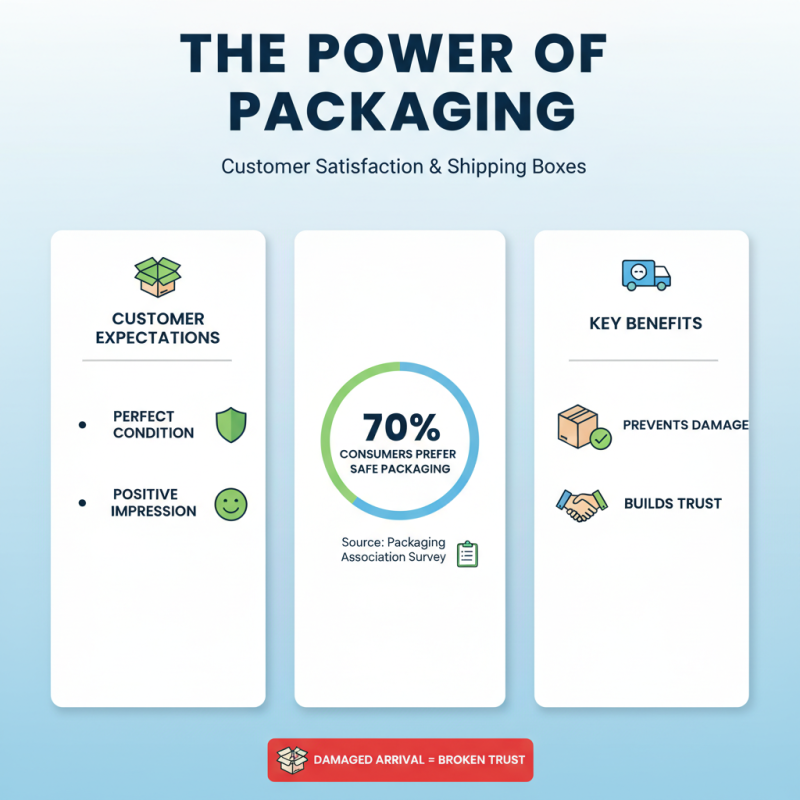
Customers expect their orders to arrive in perfect condition. Shipping boxes play a crucial role in this experience. A survey by the Packaging Association revealed that 70% of consumers prefer brands that ensure packaging safety. Quality materials prevent damage during transit. They also create a positive first impression. When a box arrives damaged, customer trust can be shattered.
Consider the environmental impact, too. According to a report from the Sustainable Packaging Coalition, nearly 50% of consumers would switch brands for sustainable packaging. This shows that quality isn't just about protection; it’s also about perception. Boxes made with recyclable materials can enhance brand loyalty. In contrast, flimsy packaging could lead to returns. This not only costs businesses money but tarnishes reputations.
Yet, some businesses overlook these aspects. They prioritize cost over quality, risking customer satisfaction. Poor packaging decisions can escalate into damaged goods and unhappy customers. Addressing these issues requires reflection on packaging choices. A strong focus on quality can yield higher retention rates and positive reviews. Therefore, evaluating shipping options is essential for long-term success.
Cost-Effectiveness of Selecting the Right Shipping Solutions
Choosing the right shipping boxes can significantly impact your business's cost-effectiveness. According to the Packaging Association, packaging accounts for about 30% of logistics costs. A well-chosen box can reduce shipping expenses by minimizing dimensional weight charges. Improper packaging often leads to increased costs, like damages during transit. This is a common issue.
A report by the Environmental Protection Agency shows that 75% of all packaging waste is recyclable. Selecting the right shipping materials can enhance sustainability and reduce landfill contributions. Using eco-friendly boxes may attract environmentally-conscious consumers, leading to increased sales. However, many businesses overlook this aspect, losing potential revenue.
Investing in good packaging is crucial. A study by Smithers Pira indicated that the global market for packaging is expected to reach $1 trillion by 2024. Firms that ignore shipping box selection risk falling behind competitors. It's vital to analyze options deeply and not settle for the cheapest. Sometimes, a higher-quality box may save more in the long run, despite the initial cost.
Impact of Shipping Box Selection on Cost-Effectiveness