10 Essential Tips for Choosing Cardboard Shipping Boxes?
Choosing the right cardboard shipping boxes is crucial for any business. Packaging plays a significant role in presenting products. A well-chosen box protects items during transit and enhances branding. It's essential to consider factors like size, strength, and sustainability.
Many may overlook the importance of box quality. A flimsy box can damage goods, leading to customer dissatisfaction. Additionally, improper sizing results in wasted space and increased shipping costs. One might think that any box will do, but this can be misleading. The wrong choice might reflect poorly on your business.
Sustainability is an important factor in today's market. Customers increasingly prefer eco-friendly options. Cardboard shipping boxes made from recycled materials can be a better choice. It’s vital to reflect on how choices impact the environment. Prioritizing quality and sustainability can lead to better customer relations and promote a responsible brand image.

Understanding Different Types of Cardboard Shipping Boxes
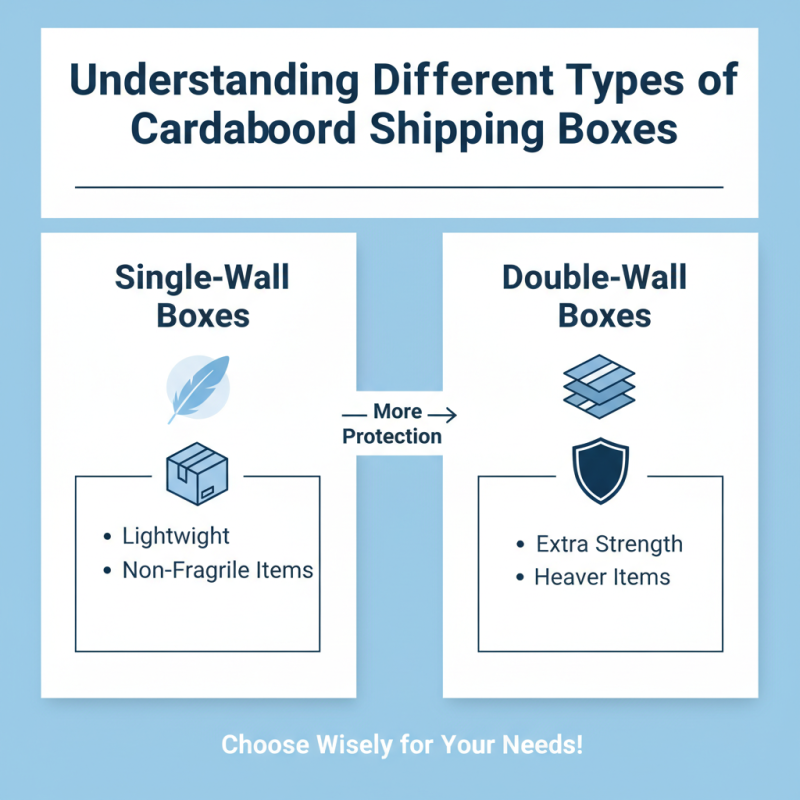
Choosing the right cardboard shipping box can be complex. There are multiple types available. Each is suited for specific needs. For example, single-wall boxes are lightweight. They are good for shipping non-fragile items. If you need more protection, double-wall boxes are better. They offer extra strength for heavier items.
Consider your products carefully. Some items require specialized boxes. A full-overlap box provides more support. It covers edges, adding stability. Other types, like mailer boxes, are designed for compact products. These can save space and reduce shipping costs.
Packing materials also matter. Bubble wrap or packing peanuts can fill empty spaces. This prevents shifting during transport. However, too much filler can waste resources. Reflect on your choices. Each box type has pros and cons. Will your shipment arrive safely? Think about durability and cost-effectiveness. Choosing wisely ensures your products reach their destination intact.
Evaluating the Size Requirements for Your Shipment
When selecting the right cardboard shipping boxes, size is crucial. An ill-fitting box can lead to damage during transit. Overly spacious boxes can allow items to shift, while too snug boxes may crush fragile goods.
Measure your items accurately. Use a ruler or tape measure to determine the length, width, and height. It's essential to account for padding and protective materials.
Another consideration is the weight of your shipment. Heavier items might require sturdier boxes with additional strength. Think about how the box will hold up during handling and stacking. While it might be tempting to save money on cheaper boxes, this could lead to more expenses down the line.
Inspect your boxes for quality and structure before you buy.
Sometimes, we overlook packaging details, leading to costly mistakes. Visualize your shipment in the box before sealing it. Will the items fit securely? Are there spaces that compromise safety?
Reflect on your past shipping experiences. Learn from them to improve future methods. Understanding these factors will guide you in making more informed choices.
Assessing the Durability and Strength of Cardboard Materials
When choosing cardboard shipping boxes, durability is key. The weight capacity of the cardboard impacts its strength. Look for double-wall boxes for heavier items. These boxes can withstand significant pressure. Single-wall options are suitable for lighter goods. However, they might not always provide adequate protection during shipping.
Consider the environmental conditions too. Humidity can weaken cardboard. Ensure the boxes have a moisture-resistant coating. This adds an extra layer of protection. Check the manufacturer's specifications for burst strength. Bursting strength indicates how much pressure the box can endure before failing.
Not all cardboard is created equal. Some boxes may look sturdy but fail under stress. You might need to test a few options before settling on the right one. One box may hold up well, while another may crumple unexpectedly. It’s wise to evaluate your shipping needs thoroughly. Remember, a less durable box can lead to damaged goods, customer dissatisfaction, and financial losses.
Cardboard Box Material Strength Comparison
Considering Eco-Friendly Options for Sustainable Shipping
When selecting cardboard shipping boxes, considering eco-friendly options is crucial. Sustainable shipping materials reduce waste and minimize environmental impact. Look for boxes made from recycled materials. These products often have a smaller carbon footprint. Many eco-friendly boxes are sturdy and provide good protection for your items.
Think about biodegradable packing peanuts or paper as cushioning materials. They break down naturally and are better for the planet. Some boxes can even be reused multiple times. This practice not only helps save trees but also cuts costs over time.
However, not all sustainable options are perfect. Some biodegradable products may still take years to decompose. There's a fine line between "eco-friendly" and "convenient." Always research the packaging options. It’s essential to weigh the benefits against potential drawbacks. Choosing sustainable shipping solutions requires careful thought.
Budgeting and Cost-Effectiveness in Box Selection
When selecting cardboard shipping boxes, budgeting plays a crucial role. Reports indicate that improper packaging can increase costs by 15% to 25%. This highlights the need for careful box selection. A balance between quality and price is essential. Cheap boxes may save money initially but can lead to costly damages during transit.
Consider the dimensions carefully, as oversized boxes can lead to additional shipping fees. According to a survey by the Packaging Association, packaging waste contributes to an estimated $500 million lost annually in shipping costs. Additionally, many companies overlook the importance of box weight. Lightweight materials can lower shipping expenses significantly.
Every choice has its trade-offs. Consider whether an eco-friendly option is worth a slightly higher price. This could attract more environmentally conscious customers. Overall, while it's tempting to go for the cheapest option, understanding the long-term financial implications is vital. Make sure to analyze the total cost of ownership, including damage rates and customer satisfaction.