Essential Tips for Choosing the Right AC Water Pump?
When selecting an Ac Water Pump, many factors come into play. An AC water pump is essential for maintaining optimal system performance. It helps remove excess water and ensures your air conditioning operates smoothly. A well-chosen pump can enhance the efficiency of your AC unit.
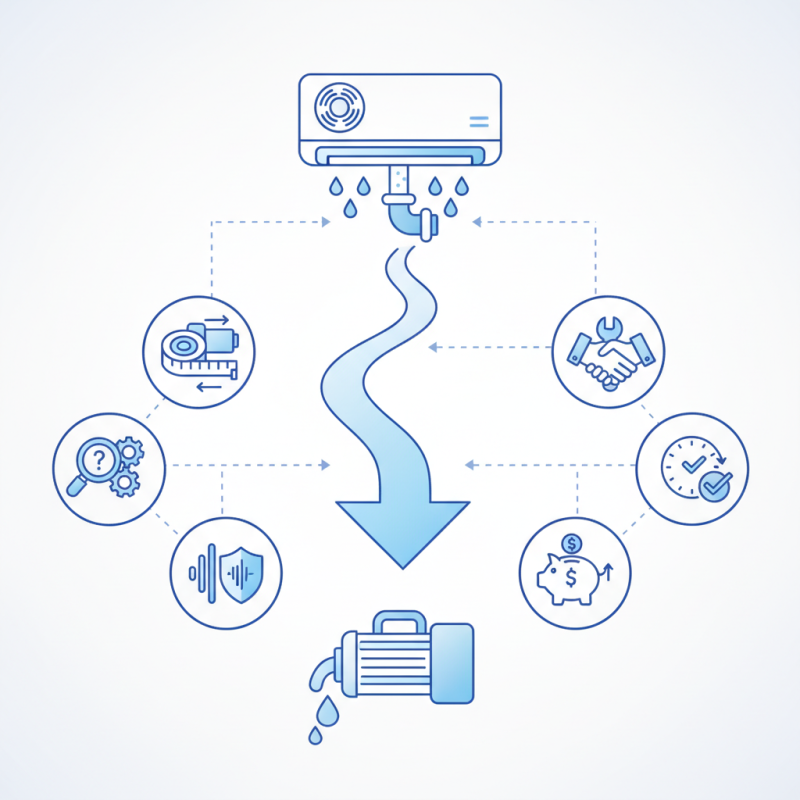
Researching makes a difference. Look for reliable brands and customer reviews. Assess the specific requirements for your AC system. Size and capacity matter. A pump too small will struggle, while an oversized one may waste energy. Consider noise levels and durability as well.
Reflect on installation. Professional help can ensure your pump is correctly set up. Improper installation may lead to future complications. Remember, this isn't just about the price; it's about long-term functionality. The right AC water pump can save you money and hassles in the long run.
Factors to Consider When Selecting an AC Water Pump
Choosing the right AC water pump requires careful consideration of several factors. First, you need to assess the size of your system. A pump that is too small won't efficiently manage excess water, while a pump that is too large may waste energy and increase costs. Make sure to measure your existing AC unit and choose accordingly.
Material quality is another critical factor. Look for durable materials that resist corrosion and wear. Pumps made from plastic or stainless steel often provide better longevity. Check the pump's specifications and reviews for insights on reliability.
Tips: Always consider the pump's flow rate and head height. Flow rate should match your AC system's drainage needs. A proper head height ensures the water lifts effectively. Choosing the right warranty gives peace of mind and reflects the manufacturer’s confidence.
Reflect on whether the initial cost aligns with long-term efficiency and durability. Consider maintenance needs too. An efficient pump saves time and resources. Don't overlook these details; they can lead to significant differences in performance and reliability.
Understanding Different Types of AC Water Pumps Available
Choosing the right AC water pump involves understanding the different types available. There are primarily two categories: submersible and inline pumps. Submersible pumps are designed to work underwater, ideal for applications requiring higher efficiency in draining or moving water. They are compact and fit easily into narrow spaces, making them a popular choice for many residential setups. However, their installation could be tricky in tight areas.
Inline pumps, on the other hand, are typically found above ground. They are easier to install and maintain but may not handle large volumes of water as effectively as submersible pumps. These pumps also usually have higher flow rates. It’s essential to consider the specific application before making a decision. You might find inline pumps more suitable for homes with standard AC systems.
Think about the noise level, too. Some pumps can be quite loud, impacting the comfort of your home. Many buyers overlook this aspect, leading to regret after installation. Reliability is critical; it can save you money on repairs. Assessing your needs and understanding these pump types can help ensure a better choice for your air conditioning system. Be prepared for trade-offs, as no option is flawless.
Assessing Pump Size and Capacity for Your Cooling System
Choosing the right AC water pump begins with assessing the size and capacity needed for your cooling system. Properly sized pumps enhance efficiency and prevent operational issues. An oversized pump can lead to unnecessary energy consumption. Conversely, a pump that’s too small may struggle to circulate water effectively, risking system failure.
Understanding your system's requirements is crucial. Measure the cooling load of your space. This will dictate the necessary flow rate. It's essential to consider your specific needs. Factors like building size, layout, and climate can influence the pump choice. You might need different capacities in various seasons. Be mindful of how often your system runs, as usage impacts wear and tear.
It’s wise to consult with experts or guidelines based on your AC system type. They can guide you through the calculation of GPM (gallons per minute) needed. Many overlook this step, which can lead to inefficient performance. Don’t hesitate to revisit your choice if things are not working as expected. Evaluating your pump's performance regularly helps in making timely adjustments.
Essential Tips for Choosing the Right AC Water Pump
| Pump Size | Capacity (GPH) | Application Area | Power Consumption (W) | Noise Level (dB) |
| 1/6 HP | 400 | Small Residential Units | 150 | 35 |
| 1/3 HP | 700 | Medium Residential Units | 250 | 40 |
| 1/2 HP | 1000 | Large Residential Units | 400 | 45 |
| 1 HP | 1500 | Commercial Units | 750 | 50 |
Evaluating Energy Efficiency Ratings in AC Water Pumps
When selecting an AC water pump, energy efficiency ratings are crucial. These ratings indicate how much energy the pump consumes. A higher efficiency rating means lower electricity bills. Look for models that optimize performance while minimizing energy use.
Consider the long-term costs of running an AC water pump. A more efficient pump may cost more upfront but save money over time. Sometimes, cheaper options may lead to higher energy consumption. This aspect can often be overlooked.
Tip: Check for certification labels that validate energy efficiency. This can be a reliable indicator. Research the average lifespan of the pump too. A durable, energy-efficient model is worth the investment. Don't forget to read customer reviews. They can provide insights into performance and reliability, beyond the technical specifications.
Key Features and Technologies to Look for in a Water Pump
When selecting the right AC water pump, it’s crucial to understand key features and technologies. First, consider the pump’s flow rate. It measures how much water can be moved in a given time. Look for a pump that matches your system's requirements. An insufficient flow rate can lead to inefficiencies. In some cases, buyers often ignore this factor, leading to performance issues.
Another important aspect is the pump’s energy efficiency. A well-rated pump uses less power, saving on electricity costs. Many models feature advanced technologies like variable speed motors. These motors adapt to changing needs, reducing energy consumption. Yet, not every buyer prioritizes energy efficiency, potentially increasing long-term expenses.
Durability should not be overlooked. Pumps constructed with robust materials last longer, especially in harsh conditions. Pay attention to warranty and service options. Some manufacturers offer extended warranties, reflecting confidence in their product. However, consumers often fail to compare warranty terms, missing out on vital insights. Aim to choose a pump that balances performance, efficiency, and durability for a reliable investment.