
7 Tips for Choosing the Right Carry Out Box

A takeout order can look perfect at the counter and arrive with a soggy base or a loose lid. The right Carry Out Box helps protect food, preserve its presentation, and make handling easier. But “right” depends on the meal. A crisp sandwich, saucy noodles, and a warm pastry each place different demands on a container. Small details matter: a secure corner, a vent that releases steam, or a base that stays firm under weight.

This guide shares seven practical tips for choosing a box that fits the food and the way it will travel. It considers size, material, leak resistance, ventilation, stacking, branding, and cost. Packaging specialist Jordan Lee’s proposed editorial line captures the main idea: “Choose the box for the journey, not just the menu.” This is a suggested quotation, not a verified statement from a sourced expert. Before publication, confirm any expert attribution. That detail deserves care.

A good choice is rarely the fanciest one. It should fit the portion without crushing it, close without a struggle, and hold up during a short ride across town. Test it with real food, not an empty sample. Watch for condensation. Check the corners after stacking. Some choices will still miss the mark. That is useful feedback, not failure. These tips offer a clear starting point for selecting a Carry Out Box that serves the meal and the customer.
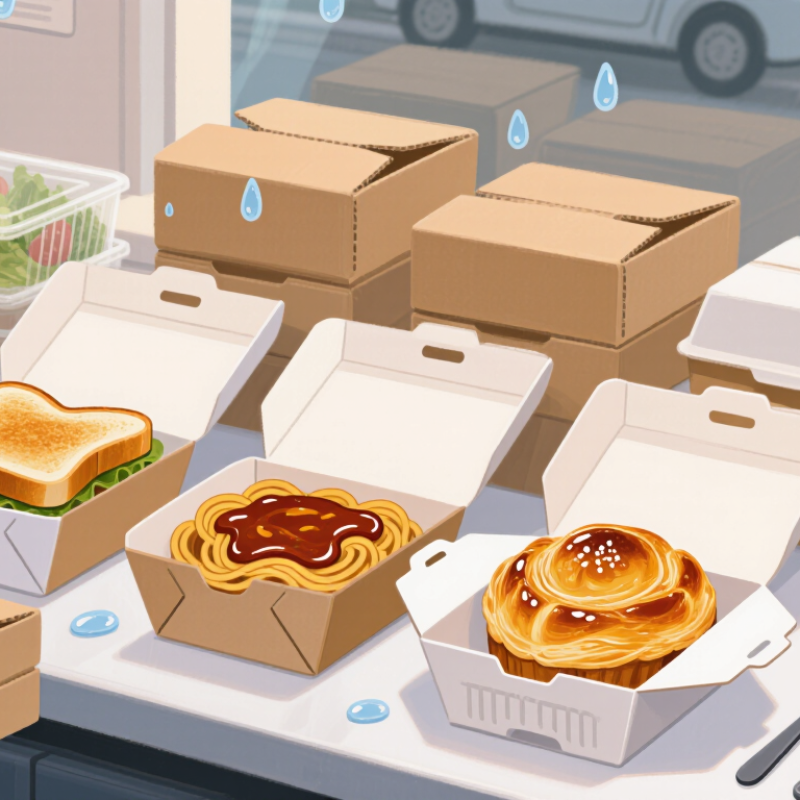
7 Tips for Choosing the Right Carry Out Box

Identify the Food Type and Intended Use

Start with the food, not the box. A crisp fried item needs room for steam to escape; a saucy noodle dish needs a secure, leak-resistant base. Sauce leaks. For rice, soups, and hot entrées, check whether the container stays stable when filled and carried. A tight lid helps prevent spills, but it can soften crisp textures by trapping moisture.

Match the box to its intended trip: a short walk home, a delivery route, or a customer’s refrigerator. The FDA Food Code (2022) sets hot-holding at 135°F or above and cold-holding at 41°F or below. A takeout box does not maintain those temperatures, so packing and delivery time still matter. USDA FSIS guidance says perishable food should be refrigerated within two hours, or one hour when temperatures exceed 90°F. That makes fit and handoff practical concerns, not just appearance. I still think teams can overlook the simplest test: fill a sample box with the actual portion, close it, tilt it gently, and check for leaks, sogginess, and awkward stacking. One test may not cover every route. Use the food and service conditions you actually expect.

7 Tips for Choosing the Right Carry Out Box: Identify the Food Type and Intended Use

Choose packaging that suits the food’s texture and journey: vented boxes help crisp foods stay crisp, while leak-resistant containers suit soups and sauces. These FDA Food Code temperature benchmarks are useful handling targets—not temperature ratings for carry out boxes.

Source: FDA Food Code 2022. Temperatures shown in °F.

Choose a Box Size and Shape That Fits the Portion

A carry-out box should fit the food, not just look roomy on a shelf. Measure a typical serving after it is plated, including its height. A generous width may suit noodles or a grain bowl, while a deeper, narrower box can keep stacked pieces from shifting. Leave a little headroom for the lid. Too much space, though, lets food slide during a car ride.

Think about the meal’s shape and texture. A flat container works well for sandwiches, pastries, and foods that should not be piled. For saucy dishes, choose a box with secure corners and enough depth to limit spills. If a meal includes crisp and moist items, separate compartments can help keep textures distinct. They are not always necessary. Extra divisions can crowd a simple portion.

Test the box with an actual serving before ordering a large quantity. Close the lid, lift the container, and gently tilt it as it might move in transit. Check whether the food gets pressed against the lid or settles into one corner. This small trial can reveal a fit problem that measurements miss. It is easy to overthink the perfect shape, too; portions vary, and one box may not suit every menu item.

Compare Materials, Durability, and Heat Resistance

7 Tips for Choosing the Right Carry Out Box

Compare the material with the meal, not just the price. Paperboard is light and easy to stack, but oily sauces may seep through unless the lining is suitable. Molded fiber feels sturdy for fries or sandwiches, though its edges can soften when food releases steam. Plastic containers often handle moisture well, but heat tolerance varies by resin and design. Check the supplier’s temperature guidance, especially before using a box for hot, greasy food. A sturdy-looking lid can still loosen at the hinge. Details matter.

Test a sample with your actual menu: hot noodles, a juicy burger, or soup carried for twenty minutes. Look for leaks, sagging corners, trapped condensation, and lids that pop open. “Microwave-safe” does not automatically mean suitable for every hot-fill or transport condition. Ask for test data covering temperature, load, and contact time. Material choice also affects waste. The U.S. EPA’s 2018 Advancing Sustainable Materials Management report estimated that containers and packaging made up 82.2 million tons, or 28.1 percent, of U.S. municipal solid waste. That figure covers many packaging types, not carry-out boxes alone, but it shows why disposal options deserve attention. Test it hot. Then check whether local collection accepts the box and any coating.

7 Tips for Choosing the Right Carry Out Box - Compare Materials, Durability, and Heat Resistance
Tip Material Durability and leak resistance Heat resistance and handling Best selection advice
1. Match the box to dry, lightweight meals Uncoated paperboard Lightweight and easy to stack, but can soften or leak when exposed to moisture, grease, or sauces. Suitable for many warm, relatively dry foods. Heat and moisture performance depend on the board and construction. Choose it for sandwiches, baked goods, and other foods that do not need a moisture barrier.
2. Check the lining for saucy foods Coated or lined paperboard The lining can improve resistance to grease and moisture, but performance varies by coating and box design. Do not assume every lined box is suitable for very hot food or reheating; check the supplier’s instructions. Use for meals with sauces or oily ingredients, and verify that the lining is intended for the food and temperature.
3. Choose a sturdy option for hot, moist meals Molded fiber or bagasse Rigid and stackable; resistance to liquid and grease varies, especially between coated and uncoated versions. Often used for hot foods, but actual temperature limits and microwave suitability depend on the specific product. Look for a firm lid fit and a stated temperature rating when packing foods with steam, sauces, or juices.
4. Prioritize strength and crispness Aluminum Resists bending better than many lightweight paper options and contains liquids when seams and lids are secure. Suitable for oven use when designed and labeled for it. Metal containers must not be used in a microwave. Consider it for oven-ready meals or foods that benefit from retaining heat; provide separate reheating guidance.
5. Confirm microwave suitability Polypropylene (PP) Lightweight and generally resistant to moisture; lid fit and leak protection depend on the container design. Some PP containers are microwave-safe, but not all. Use only according to the product’s microwave and temperature labeling. Choose a clearly labeled container when customers may reheat food, and check whether the lid must be removed first.
6. Select ovenable plastic only when needed Crystallized PET (CPET) Rigid and suitable for many prepared meals; performance depends on the tray, lid, and manufacturer’s specifications. Some CPET trays are designed for conventional oven use. Oven limits vary, and plastic lids are often not oven-safe. For oven-to-table meals, confirm the exact oven rating and reheating instructions for both the tray and its lid.
7. Avoid relying on foam for high-heat use Expanded polystyrene (EPS) foam Lightweight and insulating, but can dent or crack under pressure and may not provide a secure seal for liquids. Not suitable for conventional ovens. Heat tolerance and microwave suitability should never be assumed. Use only for applications permitted by the product labeling and local requirements; choose another material for oven heating.

Check for Secure Closures, Leak Control, and Ventilation

A carryout box should stay closed through a tilted bag, a bumpy ride, and a customer lifting it by the handles. Press each corner of the lid and check for an even fit. For soups and sauces, fill a sample box and tilt it over a sink. Check the seams, not just the lid. A tight closure can still fail if the base flexes under a heavy meal. The USDA estimates that 30–40% of the U.S. food supply is lost or wasted. That figure is not caused by packaging alone, but preventing avoidable spills is a sensible part of reducing waste.

Leak control also depends on matching the box to the food. Keep broth separate from crisp sides, and avoid stacking a hot, heavy entrée on a thin base. Then test it. A quick shake with a sealed sample can reveal weak corners before service. It is not a perfect test, but it catches obvious problems.

Ventilation matters just as much. Steam trapped around fried food softens the crust; too many vents can dry out a meal. Choose small, well-placed openings for hot, crisp items, and fewer openings for foods that need to retain moisture. The FDA Food Code sets hot-holding at 135°F or above and cold-holding at 41°F or below. A box cannot maintain those temperatures by itself, so pack promptly and keep hot and cold orders separate. Steam needs an exit. So does excess moisture.

Balance Sustainability, Cost, and Availability

7 Tips for Choosing the Right Carry Out Box

Balance Sustainability, Cost, and Availability

A good carry out box must work for the food and the business behind it. A recyclable or compostable material may sound ideal, but local collection options and actual disposal practices matter. Check what customers can realistically do with the packaging. Also consider how well it holds heat, moisture, and sauces. A box that leaks can waste food and undo some of its environmental benefit. The balance is rarely perfect.

Compare materials and disposal options before choosing. Pick a size that fits portions without excess empty space. Calculate the full cost, including lids, delivery, and storage. Estimate weekly use so you do not overbuy. Small details add up.

Check whether suppliers can maintain steady stock, especially during busy seasons. Test samples with greasy fries or a saucy dish, and leave them closed for a typical delivery period. A small trial helps. Keep a backup option with similar dimensions and performance. It may cost slightly more, or look less polished. Still, an available box that protects the meal is often more useful than a preferred option that arrives late. Revisit the choice when menu items, order volume, or local recycling access changes.

Back to top