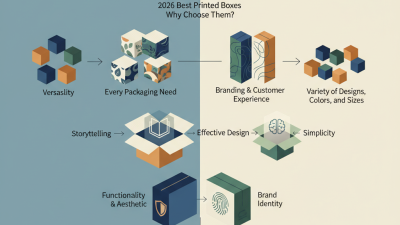
Choosing the right branded boxes supplier in China requires more than comparing attractive catalogs and low quotations. Packaging affects product protection, customer perception, shipping efficiency, and repeat purchases. This guide examines leading suppliers through practical criteria, including material quality, structural design, printing accuracy, minimum order quantities, production capacity, and export experience.
Samples reveal important details.
A reliable supplier should provide physical prototypes before mass production. Check the folding lines, magnetic closure, paper texture, foil stamping, and inner fit by hand. These small details often expose weaknesses that digital images hide. The review also considers factory communication, quality-control procedures, delivery records, and responses to production problems. Suppliers with clear specifications, documented inspections, and transparent pricing generally deserve greater confidence.
Cost still matters.
However, the cheapest quotation may create higher expenses through damaged products, color inconsistency, or delayed launches. Buyers should request material certificates, confirm packaging tolerances, and clarify whether tooling, sampling, and shipping costs are included. Environmental claims also need evidence, such as recycled content documentation or recognized forest-management certification.
This comparison is not a permanent ranking. Supplier capabilities can change with equipment, staffing, material availability, and order volume. That limitation deserves attention. A company that performs well for luxury gift boxes may not suit large-scale retail packaging. Readers should verify current licenses, factory conditions, customer references, and production samples before signing an agreement. The following sections introduce prominent branded boxes suppliers and explain which business needs each one may serve best.

China’s branded box market is expanding as retailers invest in packaging that protects products and strengthens shelf recognition. Demand is strongest for rigid boxes, folding cartons, magnetic closures, and textured paper finishes. E-commerce adds pressure. Boxes must survive sorting, stacking, and humid warehouse conditions without losing their shape. In 2024, buyers increasingly requested smaller batches, faster sampling, and recyclable paper options. That shift favors suppliers with flexible production lines, trained quality teams, and dependable material sourcing.
Production scale varies widely across China’s packaging clusters. Large factories may operate several automated cutting, printing, laminating, and assembly lines. Their output can reach hundreds of thousands of boxes daily, depending on structure and finishing requirements. Smaller specialist plants often deliver better control for complex prototypes or limited seasonal runs.
This distinction matters when selecting a top supplier. A supplier audit should examine sample approval records, color-control procedures, carton testing, and worker safety practices. Reliable suppliers report material thickness, compression results, production tolerances, and delivery performance clearly.
Growth is real, but not every order needs maximum capacity. A huge facility can still miss details. Buyers should compare sample quality with mass-production consistency, not just quoted prices. Ask for pre-production samples and inspect corners, hinges, inserts, and print alignment under normal lighting. A common failure appears when tight inserts scratch the product during packing. That weakness deserves attention. Future demand will likely reward suppliers combining automation, customization, lower waste, and responsive communication.
When evaluating Chinese branded box suppliers, start with MOQ, but do not treat it as a simple price gate. A low MOQ can hide setup fees, limited finishes, or higher unit costs. Ask for a written quotation covering box size, board grade, printing method, inserts, packing, and delivery terms. Request a pre-production sample.
Lead time should be split into sampling, production, and shipping. In practical sourcing, a supplier promising seven days often means seven production days after artwork approval, not seven calendar days. Confirm when materials are reserved. Ask how delays are reported and whether rush capacity changes the inspection plan. A shared timeline helps.
Defect rate requires evidence, not confident language. Define acceptable defects before ordering, including crushed corners, color shifts, glue marks, and weak magnets. Request recent inspection records, sample photos, and corrective-action logs. For repeat orders, calculate defects from the inspected quantity, not the reported quantity. A practical target may be below two percent, but the right threshold depends on packaging function and customer expectations. I would still inspect the first bulk shipment myself or use an independent inspector. No supplier is perfect. The useful question is whether problems are measured, disclosed, and corrected quickly.
China’s leading branded box suppliers usually specialize by material. Paperboard factories suit cosmetics, electronics, and retail packaging. Corrugated plants handle heavier products and export shipping. Rigid box manufacturers focus on premium presentation, using greyboard, coated paper, fabric, or molded inserts. Smithers’ “The Future of Global Packaging to 2028” values the global packaging market at more than one trillion US dollars, showing strong demand for scalable suppliers.
Certifications help separate capable factories from attractive catalogs. Look for FSC chain-of-custody documentation for responsible paper sourcing, ISO 9001 for quality systems, and ISO 14001 for environmental management. Food-contact packaging needs additional test evidence, not just a printed certificate. Export capacity also matters. The World Trade Organization reports China remains the world’s largest merchandise exporter, but packaging buyers should verify shipment records, production lines, and carton-loading procedures. A supplier may claim large capacity. The factory floor can tell another story.
Tips: Request material samples, recent audit reports, and a small pilot order. Check compression strength, color variation, glue marks, and edge damage after transport. Ask for monthly output by box type, not only total annual capacity. One weakness remains: certifications do not guarantee perfect delivery. I would still inspect the first production batch personally or use an independent inspection service.
| Supplier Profile | Primary Box Materials | Typical Product Applications | Common Certifications and Audits | Indicative Monthly Capacity | Export Capability | Typical MOQ | Key Purchasing Strength |
|---|---|---|---|---|---|---|---|
| Profile A: Premium Rigid Box Manufacturer | Greyboard, coated paper, specialty paper, fabric, microfiber, magnetic closures | Luxury cosmetics, jewelry, watches, gifts, consumer electronics | FSC available ISO 9001 commonly available Social compliance audit available upon request |
300,000–800,000 boxes | Regular exports to North America, Europe, Australia, and Southeast Asia; suitable for consolidated ocean and air shipments | 500–1,000 pieces per design | High-end finishing, foil stamping, embossing, debossing, inserts, and structural customization |
| Profile B: Folding Carton Supplier | Folding boxboard, coated paperboard, kraft paperboard, recycled paperboard | Food packaging, personal care, pharmaceuticals, household products | FSC available ISO 9001 commonly available Food-contact documentation available for suitable materials |
1–5 million cartons | Experienced in palletized container shipments and retail packaging programs | 3,000–10,000 pieces per design | Competitive unit pricing, fast lithographic printing, and efficient high-volume production |
| Profile C: Corrugated Mailer Box Manufacturer | Single-wall and double-wall corrugated board, kraft liner, recycled liner, E-flute and B-flute board | E-commerce shipping, subscription boxes, apparel, electronics, promotional kits | FSC available ISO 9001 commonly available ISTA testing support available for shipping designs |
500,000–2 million boxes | Suitable for container-scale export orders; supports flat-packed shipment to reduce freight volume | 1,000–3,000 pieces per size | Strong crush resistance, self-locking structures, low shipping cost, and practical fulfillment packaging |
| Profile D: Sustainable Paper Packaging Supplier | Recycled paper, kraft paper, molded paper pulp, water-based coated board | Eco-conscious retail, cosmetics, food gifts, apparel, promotional packaging | FSC or recycled-content documentation ISO 14001 may be available GRS applies only to qualifying recycled materials |
200,000–700,000 units | Exports to markets with sustainability requirements; documentation support depends on material traceability | 1,000–5,000 pieces per design | Plastic reduction, recycled content, water-based inks, and environmentally focused material selection |
| Profile E: Wood Packaging Manufacturer | Poplar, pine, MDF, plywood, bamboo, veneer, paper-covered wood | Wine and spirits, luxury gifts, promotional sets, collectibles, corporate gifts | FSC available for eligible timber ISPM 15 treatment available for applicable solid-wood packaging ISO 9001 may be available |
50,000–250,000 boxes | Export-ready wooden packaging with moisture protection and palletization options | 100–500 pieces per design | Durable construction, premium presentation, CNC cutting, engraving, hinges, and custom inserts |
| Profile F: Tin and Metal Box Manufacturer | Tinplate, aluminum, coated steel, food-grade lacquer systems | Confectionery, tea, coffee, cosmetics, candles, promotional merchandise | ISO 9001 commonly available Food-contact testing available for suitable applications RoHS or REACH documentation may be available for applicable components |
500,000–3 million units | Strong experience with full-container exports and long-distance protective packing | 5,000–20,000 pieces per shape | Long service life, reusable packaging, offset printing, embossed details, and custom tooling |
| Profile G: Magnetic Gift Box Specialist | Rigid board, specialty paper, recycled board, magnets, EVA, molded pulp inserts | Beauty sets, electronics, fashion accessories, holiday gifts, premium product launches | FSC available ISO 9001 commonly available Magnet and packaging safety documentation available upon request |
150,000–500,000 boxes | Experienced in export packing, flat-pack or assembled delivery, and mixed-component kits | 500–1,000 pieces per design | Premium unboxing experience, custom magnetic closures, layered inserts, and coordinated accessories |
| Profile H: High-Volume Retail Packaging Supplier | Paperboard, corrugated board, PET windows, kraft paper, recycled board | Supermarket products, toys, household goods, seasonal promotions, mass retail | FSC available ISO 9001 commonly available BSCI, Sedex, or equivalent social audit may be available |
2–10 million units | Structured for repeat export programs, container planning, carton optimization, and vendor-managed replenishment | 10,000–50,000 pieces per design | Large-scale output, automated inspection, stable repeat orders, and competitive pricing |
Note: FSC, ISO, GRS, BSCI, Sedex, ISPM 15, RoHS, and REACH requirements depend on the product, material, destination market, and scope of the supplier’s certification. Always request current certificates, test reports, factory-audit records, production samples, and export references before placing an order.
Custom packaging costs in China vary sharply by box structure. Folding cartons usually offer the lowest entry cost, often about US$0.20–0.80 per unit at 1,000 pieces. Rigid boxes commonly cost US$0.80–3.50. Magnetic boxes may reach US$2–7 because of thicker boards, magnets, wrapping paper, and manual assembly. These are practical sourcing ranges, not fixed quotations. Material grade, printing coverage, size, and order volume can change the final price quickly.
Smithers valued the global packaging market at approximately US$1.2 trillion in 2022. Its long-term industry forecasts also identify premium paper packaging as a continuing growth segment. That demand encourages more Chinese suppliers to offer rigid and magnetic structures. However, a lower quotation can hide weak corner finishing, uneven magnet placement, or poor color control. My experience is that sample approval matters more than catalog claims. Request a physical prototype, compression test, and detailed cost sheet. A supplier with FSC-certified materials and ISO-based quality procedures may provide stronger reliability, though certification alone is not proof of factory performance.
Tips: Compare the same board thickness, paper finish, insert design, and shipping terms. Ask for five samples from one production batch. Leave room for waste and rework. I still find folding boxes the safest choice for large-volume launches, but that judgment can change when presentation carries more value than unit cost.
Choosing among branded box suppliers in China requires more than attractive samples.
In factory reviews, I examine sustainability records beside print quality and production controls. A supplier should report recycled content, material origin, energy use, water consumption, and waste rates per order. Ask for dated records, not polished promises. Useful evidence includes chain-of-custody certificates, wastewater logs, and corrective-action reports. Some factories measure carbon vaguely. That needs scrutiny.
Testing should match the box’s actual use. For shipping cartons, request compression, edge-crush, burst-strength, vibration, and drop testing. For folding boxes, inspect crease accuracy, color consistency, glue strength, and rub resistance. Food-contact packaging requires documented migration testing from qualified laboratories. Keep test methods, sample conditions, and pass limits in the technical file. A passing report from an unrelated material proves little. Small detail. Big risk.
Quality data should be visible across batches. Ask for defect rates, inspection checkpoints, sampling plans, and photographs of retained samples. I prefer suppliers that disclose a failed test and explain the fix. Perfect records can be less credible. During a pilot order, measure dimensions with calipers, weigh board samples, and check 20 printed units under neutral light. One weakness remains: sustainability data may depend on subcontractors. Require written disclosure, audit access, and updated evidence before approving volume production.