Top ODM Baffle Bag FIBC Suppliers for Global Buyers

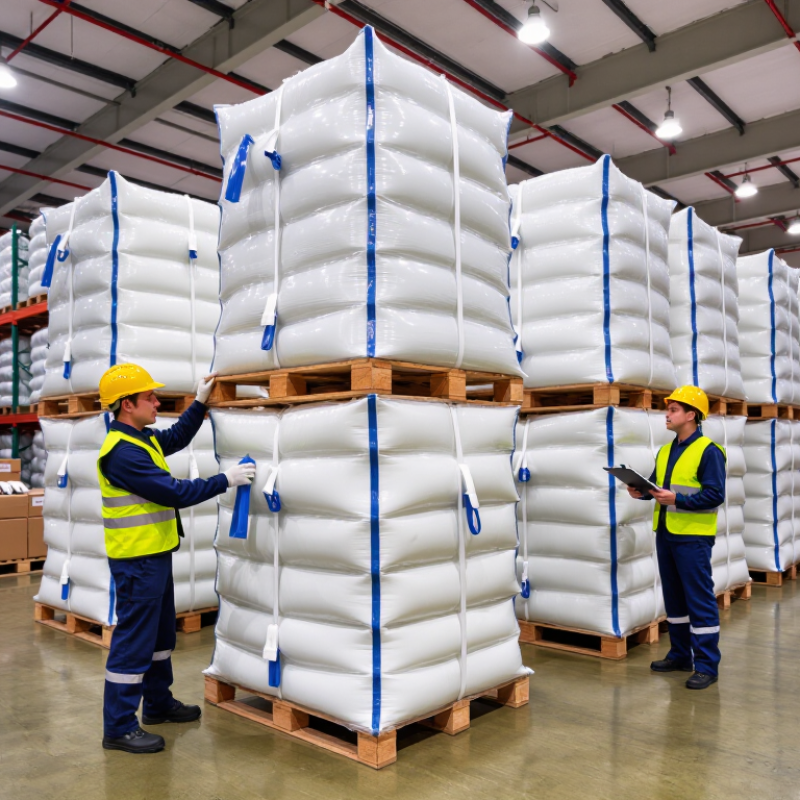
Selecting the right Odm Baffle Bag Fibc supplier requires more than comparing prices on a polished website. Global buyers need dependable construction, clear documentation, and practical communication throughout production. An ODM Baffle Bag Fibc can improve pallet stability, warehouse storage, and container utilization when its design matches the material and handling process.

Experienced buyers usually examine fabric weight, baffle stitching, lifting loops, filling options, discharge spouts, and liner compatibility. Small details matter. A poorly positioned spout can slow unloading. Weak seams may create avoidable handling risks. Suppliers should explain their testing methods, production controls, traceability systems, and quality inspection points. Relevant certifications should be verified for the intended market and application, not accepted only as scanned files.

Communication also reveals supplier reliability. Can the factory confirm tolerances, sample revisions, lead times, and packaging details clearly? Can it respond when a drawing changes? These questions often matter more than a low initial quotation. Buyers should request samples and assess fabric feel, seam consistency, dimensions, and loop alignment under realistic conditions. A strong supplier welcomes this process.

No supplier is perfect. Even careful factories can miss a detail during customization. That is why written specifications, approved samples, inspection records, and reasonable corrective procedures remain essential. This guide reviews leading ODM Baffle Bag FIBC suppliers for global buyers, focusing on manufacturing capability, customization depth, quality evidence, and long-term service reliability. Claims still deserve independent checking. Practical judgment matters.

Top ODM Baffle Bag FIBC Suppliers for Global Buyers

FIBC Market Scope: PP Woven Bags, Global Demand, and Buyer Applications

Top ODM Baffle Bag FIBC Suppliers for Global Buyers

The FIBC market reflects growing demand for efficient bulk packaging. Grand View Research estimates the global FIBC market reached approximately USD 6.5 billion in 2023, with steady growth expected through 2030. Polypropylene woven bags remain central because they combine low weight, stackability, and practical handling.

Global buyers use baffle bags for grains, seed, minerals, construction powders, and compliant food ingredients. Their internal panels help filled bags keep a square shape. That matters in shipping containers and warehouse aisles, where every centimeter counts. A typical four-panel bag can improve pallet stability and reduce wasted storage space.

Market estimates vary.

IMARC Group also reports strong expansion in flexible bulk packaging, driven by agriculture, chemicals, and construction. Buyers should examine the research method behind each forecast. Market boundaries differ, and optimistic figures can hide regional weaknesses. This is an important limitation.

Experienced ODM suppliers should provide woven fabric specifications, stitching records, load-test results, and traceable production samples. Buyers may request drop tests, lifting-loop inspections, seam-strength checks, and moisture-control options. For food applications, documented material compliance and clean manufacturing procedures are essential.

A reliable sourcing review should compare the bag’s safe working load, filling method, discharge design, liner choice, and transport conditions. The cheapest quotation may exclude testing or stabilizing additives. That mistake becomes expensive when bags deform during stacking or fail after long-distance handling.

Top ODM Baffle Bag FIBC Suppliers for Global Buyers

FIBC Market Scope: PP Woven Bags, Global Demand, and Buyer Applications

The chart presents an indicative global buyer-application mix for polypropylene woven FIBCs. Construction minerals, agriculture, chemicals, food ingredients, waste handling, and mining represent major demand areas because FIBCs provide high load capacity, efficient storage, and lower packaging weight than many rigid alternatives. Actual demand varies by region, product certification, filling method, and buyer specification.

Source note: Market-share view synthesized from publicly reported FIBC and PP woven packaging end-use segmentation; percentages are rounded estimates for market-scoping purposes and exclude supplier or brand-level data.

Baffle Bag Engineering: ISO 21898, 5:1–6:1 Safety Factors, and SWL

Baffle bag engineering begins with controlled geometry, not attractive fabric alone. Internal baffles help a FIBC keep its shape after filling. This improves stacking stability and warehouse space use. However, poor stitching can cancel those advantages. Experienced ODM teams inspect seam density, corner reinforcement, lifting-loop alignment, and fabric weight during production.

ISO 21898 provides a framework for flexible intermediate bulk container design, testing, and safe handling. Buyers should request documented test results, material specifications, and traceable inspection records. A 5:1 safety factor is common for reusable designs, while 6:1 may suit demanding handling cycles. The correct choice depends on filling density, lifting frequency, transport conditions, and discharge design. Higher is not automatically better.

Safe Working Load, or SWL, must be clearly defined. It should reflect the complete bag assembly, including fabric, seams, liners, loops, and baffles. Engineers often verify performance through repeated lifting tests and controlled top-lift trials. The bag should remain stable without visible seam distortion. Small defects matter. A slightly twisted loop can create uneven loading. In practice, specifications sometimes look precise but leave critical details unclear. Buyers should challenge vague phrases such as “heavy duty” and ask for measurable limits, test methods, and handling instructions. A careful review may reveal that the proposed SWL needs adjustment before production.

ODM Supplier Qualification: Factory Audits, Testing, Certifications, and Traceability

Top ODM Baffle Bag FIBC Suppliers for Global Buyers

A reliable ODM qualification starts inside the factory. Request an independent audit covering clean production zones, sewing controls, operator training, and corrective actions. Check whether each baffle bag follows ISO 21898 requirements for flexible intermediate bulk containers. Review tensile, seam, drop, top-lift, and electrostatic tests. Test records should show sample numbers, dates, methods, and responsible technicians.

Certification alone is not proof. ISO’s 2023 Survey recorded more than one million ISO 9001 certificates worldwide, yet certificate quality still depends on scope and verification. Ask the supplier to confirm the certificate number with the issuing body. Request recent laboratory reports, not recycled documents. Traceability should connect resin batch, fabric roll, cutting order, sewing line, inspection result, and shipment pallet. A simple QR or barcode system can help. It must still work during a factory power failure.

Tips: Visit the factory when possible. Select random production samples. Compare declared fabric weight with measured weight. Ask for failed-test records; honest factories have some. This point is often overlooked. Also review change-control rules for resin, liner, thread, and coating. UNEP’s 2023 report says plastic pollution could be reduced by 80% by 2040, making material choices and recovery records increasingly important. Reusable FIBC designs may support that direction, but reuse claims need evidence. I would not accept a sustainability statement without mass-balance data, inspection records, and clear handling limits.

Global Buyer Comparison: MOQ, Lead Times, Customization, and Total Cost

Global buyers should compare baffle bag FIBC suppliers beyond the quoted unit price. MOQ often ranges from 500 to 5,000 bags, depending on fabric weight, coating, printing, and construction. A 1,000-bag trial order may reduce inventory risk, but it can raise production costs per bag. Ask for a written specification, including safe working load, safety factor, liner type, lifting loops, and test requirements. ISO 21898 remains a useful reference for FIBC performance and handling expectations.

Lead time usually covers sampling, fabric production, sewing, inspection, and ocean transit. Standard bags may ship within 20–35 days after approval, while customized designs can require 40–60 days. The World Bank’s Logistics Performance Index 2023 shows major differences in customs reliability and shipment tracking across markets. Delays can start at the port, not the factory. Build buffer stock.

Customization affects total cost more than many purchasing teams expect. A printed bag, conductive fabric, food-contact liner, or special discharge spout may add tooling and inspection charges. Grand View Research’s flexible intermediate bulk container analysis identifies expanding demand across chemicals, food, and construction materials, increasing pressure for application-specific designs. Compare landed cost, not factory price: bag cost, testing, packaging, freight, duties, inspection, and rejected units. My practical concern is simple: the cheapest quotation often excludes something important. Ask what it excludes.

Top ODM Baffle Bag FIBC Suppliers for Global Buyers – Global Buyer Comparison: MOQ, Lead Times, Customization, and Total Cost
Anonymous Supplier Profile Primary Production Region Typical MOQ Sample Lead Time Bulk Production Lead Time Standard ODM Customization Indicative Unit Price
(10,000 Bags)
Estimated Tooling / Setup Quality & Compliance Support
Profile A High-volume export manufacturer East Asia 500–1,000 bags 7–12 working days 25–35 working days after artwork approval Bag dimensions, 4-panel construction, 4 corner baffles, filling and discharge options, coated or uncoated fabric, logo printing US$2.20–3.10 US$0–300 for standard artwork and printing setup Commonly available: ISO 21898 testing, tensile strength reports, UV testing, food-contact documentation upon request
Profile B Flexible low-MOQ ODM producer South Asia 300–500 bags 10–15 working days 30–45 working days after specification confirmation Custom fabric density, liner integration, sift-proof seams, duffle top, spout bottom, document pouch, and two-color printing US$2.35–3.45 US$100–500 depending on printing and liner design Batch inspection, fabric GSM records, seam-strength checks, and load-test reports are generally available
Profile C Food and pharmaceutical-oriented producer East Asia 1,000–2,000 bags 12–18 working days 35–50 working days after technical approval Clean-room packing options, virgin polypropylene fabric, conductive or antistatic configurations, PE liners, tamper-evident closures US$3.10–4.60 US$300–1,000 for special materials, liners, or antistatic components Best suited to buyers requiring traceability, material declarations, hygiene controls, and documented inspection procedures
Profile D Cost-focused bulk commodity supplier South Asia 1,000–3,000 bags 10–14 working days 25–40 working days after order confirmation Standard 90 × 90 × 110 cm and 95 × 95 × 120 cm formats, basic baffles, coated fabric, standard inlet and outlet designs US$1.85–2.65 Usually US$0–200 for standard specifications Routine dimensional, fabric-weight, stitching, and safe-working-load inspections; advanced testing may be charged separately
Profile E Short-lead-time regional supplier Eastern Europe 500–1,500 bags 5–10 working days 20–35 working days after approval Rapid artwork changes, standard baffle patterns, coated fabric, liner fitting, pallet-ready packing, and regional language labeling US$3.20–4.80 US$0–400 for standard configurations Useful for European buyers seeking shorter regional transit, local communication, and faster replacement orders
Profile F Technical hazardous-material packaging producer East Asia 1,000–2,000 bags 15–25 working days 40–60 working days after design validation Type C or Type D antistatic designs, grounding tabs, conductive threads, special liners, UN-related testing support where applicable US$4.20–7.50 US$800–2,500 for technical materials, testing, or custom components Requires project-specific verification; may provide electrical-resistance records, load testing, and third-party laboratory coordination
Profile G Retail-ready and printed packaging supplier East Asia 500–1,000 bags 10–16 working days 30–45 working days after artwork approval High-resolution flexographic printing, branded color matching, barcode labels, retail packaging, custom pallets, and moisture-protection wrapping US$2.80–4.20 US$150–700 depending on print colors and packaging format Suitable when presentation, lot identification, packaging consistency, and barcode accuracy are important
Profile H Small-batch development and prototyping supplier South Asia 100–300 bags 7–14 working days 35–55 working days after prototype sign-off Prototype dimensions, mixed sample configurations, different lifting-loop designs, test liners, and trial printing US$3.50–5.80 US$100–600 depending on prototype complexity Appropriate for new product validation; buyers should confirm repeatability before moving to high-volume production
Cost basis: indicative factory-level pricing for standard polypropylene baffle bags with a typical safe working load of approximately 1,000–2,000 kg, excluding freight, duties, taxes, inspection fees, special certifications, and destination handling. Actual quotations vary according to dimensions, fabric GSM, coating, liner type, printing, loading configuration, order volume, payment terms, and shipping route. Buyers should request a specification sheet, pre-production sample, load-test evidence, and a complete landed-cost quotation before placing an order.

Compliance and Delivery: UN 13H Certification, Packaging Tests, and Logistics

For global buyers, a baffle bag supplier must treat compliance as a production discipline, not a document exercise. UN 13H certification applies to specific FIBC designs and intended contents. The code does not automatically cover every size, liner, fabric, or closure. Ask for the test report, certificate scope, manufacturing specification, and lot traceability. A competent supplier should explain the filling method, discharge design, safe working load, and safety factor clearly. Vague answers deserve a pause. A certificate alone is not enough.

Packaging tests should reflect the actual bag configuration. Typical UN evaluations include drop, stacking, top-lift, tear, topple, and righting tests, where applicable. Test samples need matching fabric, seams, lifting loops, liner, and closure. Changing the inlet can change performance. So can adding a liner. Request dated reports and photos of identification marks before mass production. During factory checks, inspect seam density, loop attachment, print accuracy, and moisture protection. Small defects matter. In practice, production controls can drift after successful sample testing.

Reliable delivery begins before loading. Confirm approved drawings, inspection points, packing quantity, container utilization, and shipment milestones. Bags should remain dry, compressed carefully, and protected from sharp edges during transport. Use batch labels linking each pallet to raw materials and inspection records. For international shipments, verify documents, gross weight, pallet dimensions, and destination requirements early. Keep contingency time for port delays. It feels inefficient, but it prevents rushed decisions. The weakest step may be outside the factory.

Back to top