
2026 Top Thermal Printer Paper Types for Global Buyers?

Choosing the right Thermal Printer Paper is not simply a matter of comparing prices. Global buyers need to match paper type with the printer, application, and expected storage conditions. A receipt used for a quick transaction has different needs from a shipping label that must remain readable through handling and transport. Small details matter.

This guide examines common options, including standard direct thermal rolls, top-coated paper, linerless labels, and durable synthetic media. Each has trade-offs. Top coatings can offer added resistance to moisture, oils, or abrasion, but performance varies by product. Standard grades may suit everyday receipts, while synthetic media can be useful where paper labels face rougher conditions. No single type fits every market.

Before placing a large order, check the printer’s supported roll width, core size, outer diameter, and winding direction. Compare paper weight, coating consistency, image darkness, and resistance to fading under expected heat and light. Ask suppliers for technical data and samples, then test them on the actual printer. It sounds obvious, yet sample testing is often skipped when deadlines are tight.

Buyers should also clarify packaging, pallet specifications, lead times, and documentation with each supplier. Environmental claims deserve careful review; request evidence for the specific product rather than relying on broad marketing language. Paper that performs well in a cool warehouse may behave differently in a hot delivery vehicle. There is no universal winner. The best choice balances print reliability, operating conditions, total cost, and realistic product evidence. Even a careful comparison has limits, so validate important assumptions before committing to volume.
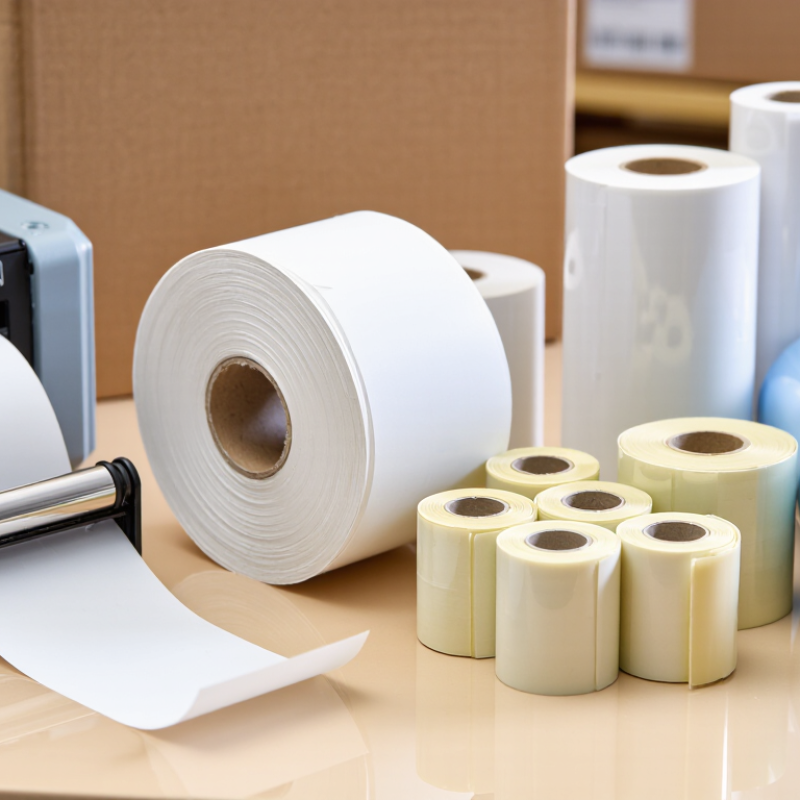
2026 Top Thermal Printer Paper Types for Global Buyers?

How Thermal Printer Paper Works and How Its Types Are Classified

How Thermal Printer Paper Works and How Its Types Are Classified

Thermal printer paper reacts to controlled heat, not liquid ink. A printhead presses tiny heated elements against its coated surface. In direct thermal paper, the heat activates dye and developer chemicals, creating black marks within milliseconds. This explains the sharp receipts, labels, and queue tickets seen at checkout counters. The image can fade under sunlight, heat, plasticizers, or prolonged friction.

Thermal paper is classified by imaging method, coating structure, and intended use. Direct thermal grades suit short-life receipts and shipping labels. Thermal transfer grades use a heated ribbon, producing more durable images on paper, synthetic film, or specialty stock. Additional classifications include standard, adhesive, linerless, top-coated, and chemically resistant grades. Surface smoothness matters. A rough coating can increase printhead wear and create uneven barcodes.

Industry estimates differ, but the direction is clear. Smithers’ The Future of Thermal Printing to 2028 valued the global thermal printing market at about USD 4.4 billion in 2023 and projected continued growth through 2028. Grand View Research also reported strong demand for thermal paper, especially in retail, logistics, and healthcare. These figures are useful, though market boundaries vary between reports. Buyers should test samples under real conditions: a cold warehouse, a hot delivery vehicle, or a damp storage room. A paper that looks perfect indoors may fail later. That uncomfortable detail is often missed.

Direct Thermal Paper: Grades, Coatings, and Common Uses

2026 Top Thermal Printer Paper Types for Global Buyers?

Direct Thermal Paper: Grades, Coatings, and Common Uses

Direct thermal paper develops images through heat, without ink ribbons or toner. Its structure usually includes a paper base, undercoat, thermal layer, and protective topcoat. The thermal layer contains a color former and developer. Heat activates them at the printhead.

Standard grades suit receipts, queue tickets, and short-life transaction records. Premium grades offer sharper images and better resistance to moisture, oils, friction, and plasticizers. Top-coated stock performs better on logistics labels exposed to condensation or repeated handling. Phenol-free grades are increasingly requested for food, retail, and healthcare applications. Buyers should still verify the chemical declaration and test the finished label.

According to Grand View Research, the global thermal paper market was valued at about USD 4.3 billion in 2023, with continued growth projected through 2030. Smithers also identifies retail, transport, and logistics as major demand areas in its thermal printing outlook. These figures support wider adoption, but they do not make every grade interchangeable. A 58 gsm receipt roll may work well at a checkout counter, yet fail on a cold warehouse dock. I have seen buyers compare only brightness and price. That is a weak test. Print density, image fade, curl, caliper, humidity exposure, and printer temperature need checking. A small trial run often reveals coating defects before a large shipment does. Some assumptions remain imperfect, especially when storage conditions differ between regions.

Thermal Transfer Paper: Compatible Stocks and Applications

Thermal transfer paper remains a practical choice when labels must survive handling, moisture, or long storage. A ribbon transfers ink onto coated paper, semi-gloss stock, or synthetic face material. Each stock behaves differently. Uncoated paper suits shipping cartons and short-term warehouse labels. Semi-gloss paper gives sharper barcodes and cleaner retail information. Synthetic stock performs better near condensation, abrasion, and outdoor exposure.

Market evidence supports this steady demand. Smithers’ 2024 forecast places the global packaging print market above US$600 billion by 2028, with labels remaining a valuable application area. Thermal transfer printing supports this growth because users can match ribbon chemistry with the surface. Wax ribbons suit economical paper labels. Wax-resin improves rub resistance. Resin works best on synthetic materials and demanding industrial identification. In practice, incorrect matching causes weak edges, missing bars, or dark smears. I still see buyers select paper by price alone. That shortcut often increases replacement costs.

Tips: Test the actual ribbon, paper, print speed, and storage conditions together. Print a small batch first. Check barcode readability after rubbing, bending, and humidity exposure. The GS1 General Specifications recommend verifying symbol quality with suitable measurement equipment, not eyesight alone. Keep unused rolls sealed and away from heat. A useful review point is often missed: adhesive performance can fail before the printed image does. For food, healthcare, or export shipments, confirm the substrate and adhesive meet the destination market’s requirements. Properties vary between suppliers, even when paper names sound identical.

2026 Top Thermal Printer Paper Types for Global Buyers? - Thermal Transfer Paper: Compatible Stocks and Applications

Stock type Face material and surface Common ribbon match Typical strengths and limitations Typical applications Buyer checks
Uncoated paper Cellulose paper with a porous, uncoated print surface Usually wax; confirm print quality with the selected ribbon and printer settings Economical and suitable for everyday labels. Less resistant to moisture, abrasion, oils, and chemicals than coated or synthetic stocks. Shipping labels, carton identification, inventory, and short-term product labels used in dry conditions Check paper weight, surface smoothness, adhesive suitability, and expected label life.
Coated paper Paper with a top coating designed to provide a smoother print surface Wax or wax-resin, depending on the coating and durability requirement Can produce sharper text and barcodes than many uncoated papers. Coatings vary, so ribbon adhesion and abrasion resistance should be tested. Retail, logistics, shelf, and general-purpose product labels Request a print test for barcode readability, ribbon transfer, and resistance to handling.
High-gloss paper Paper with a smooth, glossy topcoat Wax-resin is commonly considered; verify compatibility with the specific topcoat Supports a polished appearance and detailed graphics. Paper construction is still vulnerable to prolonged moisture and tearing. Premium product identification, packaging, and retail presentation labels Confirm that the gloss coating accepts the ribbon and that the finish suits the application.
Matte synthetic film (PP) Polypropylene film, often supplied with a matte or printable topcoat Resin or a supplier-qualified wax-resin ribbon; compatibility depends on the film surface Resists water and tearing better than paper and offers some flexibility. Chemical and heat resistance vary by film and coating. Personal-care, household-product, and other labels exposed to occasional moisture Test the ribbon, label adhesive, application surface, and exposure conditions together.
Polyethylene film (PE) Flexible synthetic film that can conform to squeezable containers Typically a resin ribbon approved for the specific printable PE surface Flexible and water-resistant, but can stretch or wrinkle. Print performance depends on surface treatment and the matched ribbon. Squeezable bottles, flexible packaging, and curved containers Check conformability, surface energy, adhesive performance, and resistance to rubbing or chemicals.
Polyester film (PET) Dimensionally stable synthetic film, usually with a printable topcoat Resin ribbon matched to the PET coating Good dimensional stability and durability; suitable for demanding environments when the full label construction is specified accordingly. Equipment, electrical, asset, and durable product identification labels Specify required temperature, chemical, abrasion, and service-life performance; validate with testing.
Tag and ticket paper Uncoated or coated paper supplied without pressure-sensitive adhesive Wax or wax-resin, selected for the surface and handling conditions Useful where a hole, tie, or separate attachment method is preferred. Paper grades differ in tear strength and moisture resistance. Price tickets, garment tags, baggage tags, and warehouse identification Check caliper, stiffness, hole placement, printer feed path, and attachment method.

Compatibility note: Thermal transfer printing uses a ribbon to transfer ink onto the label or tag surface. Ribbon recommendations are general starting points, not guarantees; test the exact stock, ribbon, printer settings, adhesive, and end-use conditions before production.

Specialty Thermal Papers for Labels, Receipts, and Harsh Environments

Specialty thermal papers serve different jobs. Label stock needs a durable topcoat that resists rubbing, moisture, and handling. Receipt paper prioritizes crisp printing and readable text at the point of sale. For cold rooms or outdoor shipments, standard grades may fade or become brittle. A thermal paper market report by Grand View Research estimated the global market at about USD 4.4 billion in 2023, with continued growth expected through 2030. That scale reflects broad demand, but it does not mean every grade suits every printer or environment.

For harsh conditions, compare the paper’s tested resistance to heat, light, oils, and plasticizers. These details matter when labels sit on chilled cartons or pass through warm delivery vans. Direct thermal stock avoids ribbons, while thermal transfer labels use a ribbon for applications needing longer image life. Test actual rolls on your printer. A small trial can expose feed issues before a full order. One weakness: test results may not match real storage conditions perfectly.

Tips: Ask suppliers for test data, storage guidance, and sample rolls. Print a batch, then check contrast after exposure to the temperature and handling your labels will face. Keep the test simple. Record the paper grade, printer settings, and results; this small habit can prevent costly reprints.

How Global Buyers Compare Paper Specifications, Compliance, and Supply Needs

For global buyers, thermal paper selection starts with the printer and the working conditions. Direct thermal rolls suit many receipt and label applications, while coated grades may offer better resistance to moisture, oils, or handling. Check paper width, roll diameter, core size, and basis weight against the device specifications. Small details matter. A roll that fits the holder may still feed poorly if its winding or core is inconsistent.

Compare print sensitivity and image durability using samples, not specification sheets alone. Test a receipt under expected heat, light, and handling conditions. Ask suppliers for technical data and current compliance documents relevant to the destination market and intended use. Requirements can vary by region and product category, so confirm them with qualified local advisers. Avoid treating a familiar chemical-free claim as a complete compliance review. It may not be.

Supply planning deserves equal attention. Compare minimum order quantities, production lead times, packaging, and batch consistency. Request samples from more than one production lot when stable printing is important. A low unit price can be misleading if rolls arrive late or create printer jams. Keep a practical buffer for seasonal demand, but do not overstock paper that may change in performance or specifications. No spreadsheet catches every shop-floor surprise. Buyers should record test results and revisit assumptions after the first shipment.

Back to top