What Are Custom Made Boxes and Why Choose Them?

Custom made boxes are no longer limited to luxury brands or special product launches. They now support practical needs across e-commerce, retail, food, cosmetics, and industrial supply chains. A box can be measured around the product, rather than forcing the product into excessive empty space. That difference affects protection, shipping efficiency, shelf presentation, and customer perception.

The Smithers report, The Future of Global Packaging to 2028, projects the global packaging market will approach $1.2 trillion by 2028. Its findings reflect continued demand for packaging that improves performance and supports sustainability goals. The International Packaging Press Organisation also highlights the importance of responsible packaging design. Luciana Pellegrino, former president of the World Packaging Organisation, has said, “Packaging has a fundamental role in protecting products and reducing waste.” Her point is simple. A beautiful box still fails if it damages the product or creates unnecessary material waste.

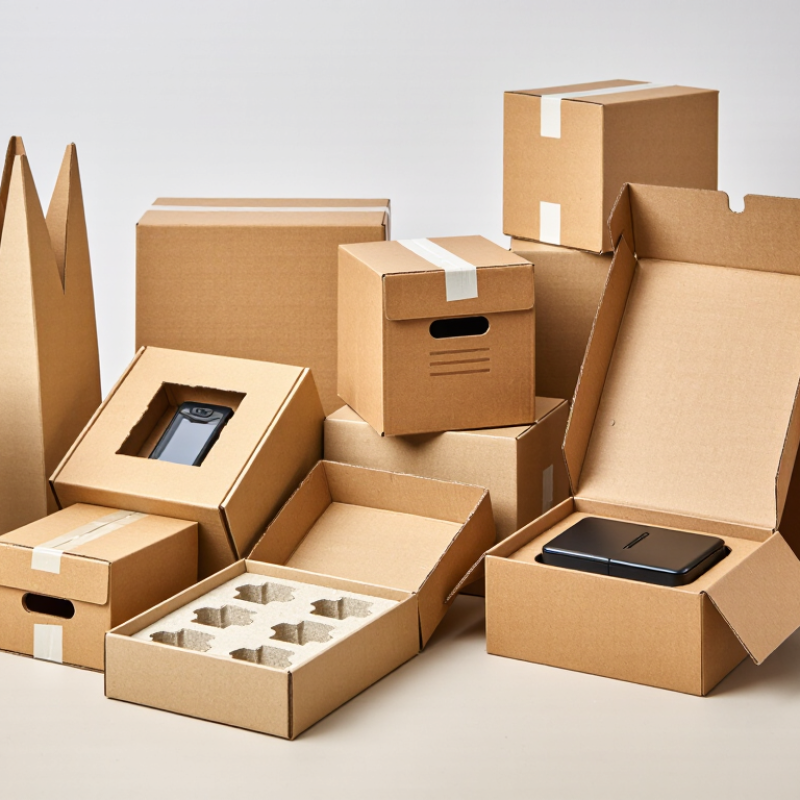
In practice, custom made boxes may include reinforced corners, fitted inserts, recyclable board, tamper-evident seals, or low-ink printing. These details matter when a glass bottle moves through a delivery network or when a phone-sized product sits in a large carton. Yet customization is not automatically better. It can increase tooling costs, minimum order quantities, and production complexity. That trade-off deserves honest attention. This guide explains what custom made boxes are, how they are produced, and why businesses choose them. It also examines their limitations, environmental considerations, and real-world value beyond attractive branding.
What Are Custom Made Boxes and Why Choose Them?

Custom Made Boxes Defined: Fit, Materials, and Structural Design

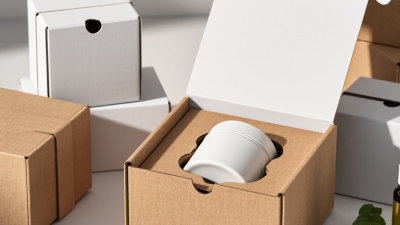
Custom made boxes are designed around a product’s dimensions, weight, and handling needs. A close fit can limit movement, reduce excess filler, and make unpacking feel more considered. For example, a small glass jar may need a snug insert, while a flat notebook can sit safely in a shallow mailer. Fit should allow for protective padding without making the box difficult to open.

Material choice affects protection, appearance, and shipping weight. Corrugated board offers cushioning for heavier or fragile items, while paperboard suits lighter products and crisp printed details. Recycled content may be available, but its strength and surface finish can vary. Test the actual material. A sample box packed with the real product often reveals weak corners or awkward folds that a drawing misses.

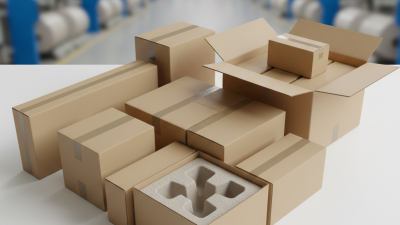
Structural design covers the box’s panels, folds, closures, and inserts. A tuck flap opens quickly; a reinforced base can better support a dense product. These details should match how the box will be packed, stacked, and shipped. Small differences matter. Still, custom design is not automatically better: unusual shapes can use more material, and a precise fit may leave too little room for cushioning. Check dimensions, packing steps, and transport conditions before approving a production sample.

Box Engineering Explained: How Dimensions Control Protection and Material Use

Custom made boxes are engineered around the product, not simply selected from a standard size. Length, width, and height determine how tightly an item sits inside the carton. Excess space allows movement during transport. That movement creates impact energy, especially at corners and edges. A well-fitted box reduces shifting and can lower the need for thick cushioning.

Material use also depends on dimensions. A smaller footprint usually requires less corrugated board, tape, and void fill. The U.S. Environmental Protection Agency reported that containers and packaging generated 82.2 million tons of municipal solid waste in 2018, equal to 28.1% of the total. Small design changes can therefore matter at scale. However, reducing board too aggressively can weaken compression strength. That is where practical testing matters.

Engineers review flute structure, panel proportions, stacking loads, and product weight. They may use transit trials based on International Safe Transit Association procedures, including vibration, drops, and compression. The OECD has reported that packaging represents about 40% of global plastic demand, reinforcing the value of efficient package design. Still, one design rarely fits every shipment. Humidity, warehouse stacking, and manual handling can change performance. A box that works in a clean test may fail on a wet loading dock. Careful measurements help, but real shipping experience should challenge the drawing.

What Are Custom Made Boxes and Why Choose Them? — Box Engineering Explained: How Dimensions Control Protection and Material Use

Illustrative Product Product Dimensions
(L × W × H)
Custom Box Interior
(L × W × H)
Larger Reference Box Interior
(L × W × H)
Approx. Flat-Blank Area
Custom / Reference
Estimated Area Reduction Engineering Consideration
Ceramic mug 4 × 4 × 5 in 5 × 5 × 6.5 in 7 × 7 × 9 in 230 / 448 sq in About 49% The custom size leaves room for protective cushioning while limiting unnecessary movement. Fragile items still require suitable cushioning and transit testing.
Folded apparel 10 × 8 × 2 in 11 × 9 × 3 in 13 × 11 × 5 in 480 / 768 sq in About 38% A closer fit can reduce void fill and help prevent shifting. Allow extra space if the garment is bagged or folded inconsistently.
Small electronic device 8 × 5 × 1.5 in 9.5 × 6.5 × 3.5 in 12 × 9 × 5 in 416 / 588 sq in About 29% Space for inserts or cushioning can help control movement. Box dimensions alone do not determine impact protection; packaging materials and distribution conditions matter.

How to read these estimates: Dimensions are illustrative examples in inches, not measured product benchmarks. Flat-blank area is approximated using 2 × (L + W) × (H + W), a simplified estimate for a regular slotted carton; it excludes manufacturer’s joint, trim, overlaps, and board-thickness effects. Actual box design, board grade, cushioning, and fit should be selected and tested for the product and shipping conditions.

E-Commerce Context: Online Sales Were 16.1% of U.S. Retail in 2024

Custom-made boxes are designed around a product’s size, weight, and shipping needs. In e-commerce, that fit matters: a ceramic mug shifting inside an oversized carton may need extra paper, while a snug box can reduce movement. The U.S. Census Bureau reported that e-commerce accounted for 16.1% of U.S. retail sales in 2024, with online sales reaching an estimated $1.19 trillion. That scale makes packaging a practical part of the delivery experience, not just a container.

A box tailored to a product can help limit empty space and make packing more consistent. It may also help protect fragile items when paired with suitable cushioning; the box alone is not a guarantee. The Census Bureau’s annual figures show online sales grew 8.1% from 2023, faster than total retail sales. For sellers, that growth can mean more parcels to pack and more chances for small design problems to repeat. A slightly awkward fold can slow a packing line. It happens.

Tips: Measure products at their widest points, including lids or handles. Test a sample with realistic cushioning before ordering in volume. Check how the packed box behaves after a short drop and a shake; those simple checks cannot replace formal testing, but they can reveal obvious gaps. Source: U.S. Census Bureau, Quarterly Retail E-Commerce Sales, Fourth Quarter and Annual 2024.

What Are Custom Made Boxes and Why Choose Them?

E-commerce context: online sales accounted for 16.1% of U.S. retail sales in 2024.

Custom made boxes can be designed to fit products and support a consistent unboxing experience for online orders.

Source: U.S. Census Bureau, 2024 annual e-commerce retail sales estimate. In-store share is calculated as 100% minus online share.

Sustainability Lens: EPA Recorded 82.2 Million Tons of U.S. Packaging Waste

Custom-made boxes are sized and built around a product instead of selected from standard dimensions. A closer fit can reduce empty space, extra inserts, and oversized shipping cartons. But custom does not automatically mean sustainable. Material choices, production, shipping, and end-of-life options all matter.

The scale matters. The U.S. Environmental Protection Agency estimated that 82.2 million tons of packaging and containers were generated in the U.S. municipal solid waste stream in 2018. Paper, plastic, glass, and metal all contribute, though their impacts differ. A box that fits a ceramic mug may need less cushioning, while a coated, multi-material box can be harder to recycle. Small choices add up. Yet the answer is not always obvious.

For a practical assessment, measure the packed item, including fragile corners and protective wrap. Ask about recycled content, coatings, and whether local recycling programs accept the materials. Test a lighter design with real shipments before changing every package.

A crushed corner can mean product loss and another shipment, weakening the environmental benefit. It is also worth checking whether a standard box performs just as well.

Custom sizing helps when it solves a real packaging problem. Maybe that is less exciting than a perfect-looking box. It is more useful.

Selection Criteria: Compare Cost, Branding, Protection, and Recyclability

Custom-made boxes are designed around a product’s dimensions, weight, and shipping needs, rather than chosen from standard sizes. A snug fit can reduce shifting and the need for extra filler. Small details matter. But a custom box is not automatically the better choice; unusual dimensions may increase setup costs or create more material waste.

Compare the full cost, not just the price per box. Order volume, printing, and special finishes can change the final figure. A simple, unprinted design may work well for a small run, while larger orders can make tailored sizing more economical. Branding also deserves a practical test: a clear logo and readable product information may be more useful than heavy ink coverage. Looks matter. Ask for a sample before approving a large order, since colors and folds can appear different in person.

Protection should match the product’s actual risks. Check how the box handles stacking, damp conditions, and a short drop during transit. For fragile items, inserts can help, though they add cost and material. Recyclability depends on the whole package, including coatings, tape, and mixed materials. Ask suppliers what local recycling facilities typically accept. Paper-based options may be easier to recycle, but only when their finishes and components are compatible. There is no perfect choice; weigh protection, presentation, budget, and end-of-life handling together.

Back to top