Why Choose Custom Size Boxes for Global Shipping?
Global shipping is getting faster, heavier, and less forgiving. The Pitney Bowes Global Parcel Shipping Index recorded approximately 161 billion parcels worldwide in 2022. Every parcel carries cost, handling risk, and environmental pressure. A standard box may leave empty space around a ceramic mug, skincare bottle, or replacement component. That gap is not harmless. It can increase movement, require extra cushioning, and raise dimensional shipping charges.
Custom size boxes offer a more controlled alternative. They match the product’s actual dimensions, reducing unused volume and improving pallet efficiency. The World Economic Forum and Ellen MacArthur Foundation estimated that USD 80–120 billion in plastic packaging value is lost annually. Better sizing cannot solve packaging waste alone. It can reduce one visible source of inefficiency. The answer is not perfect.
Packaging author Walter Soroka’s principle remains useful: “Packaging is the product.” A box is often the customer’s first physical experience with an international brand. Its fit, strength, print quality, and opening experience communicate operational discipline. In my experience, small dimensional changes can affect stacking, warehouse picking, and damage rates more than expected. Still, right-sizing requires testing. A box that saves material may fail under humidity, vibration, compression, or repeated handling. International Safe Transit Association testing methods can help verify performance before large-scale shipment.
This introduction explores why custom size boxes support global shipping strategies. It considers freight efficiency, product protection, branding, sustainability, and customer expectations. Some assumptions deserve questioning. Smaller does not always mean better. The strongest design balances measured protection with responsible material use.
What Custom Size Boxes Are and How They Support Global Shipping
Why Choose Custom Size Boxes for Global Shipping?
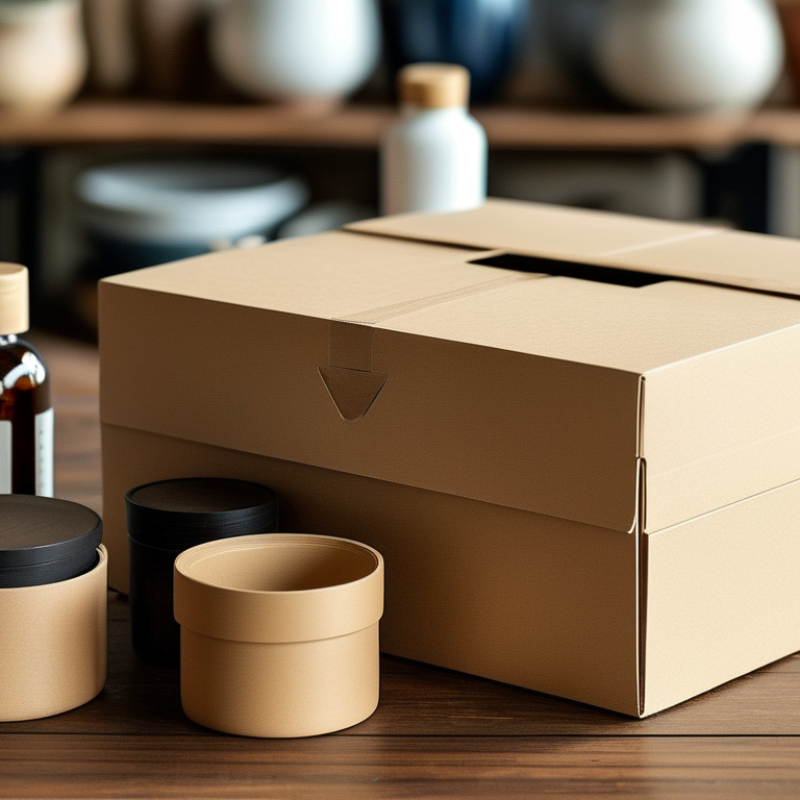
Custom size boxes are packaging made to match a product’s measured length, width, and height. They reduce empty space around items during international transport. This matters because dimensional weight can increase freight charges, even when the product is light. In practical packing tests, a tight fit also limits movement, corner impact, and the need for excessive cushioning. Yet, a perfect fit is not always ideal. A few millimeters of clearance may protect fragile surfaces during loading and unloading.
Global shipping needs more than compact packaging. The World Bank’s 2023 Logistics Performance Index highlights reliability, tracking, and delivery predictability as major logistics priorities. Custom boxes support these goals by improving pallet stability and simplifying carton identification. UNCTAD reported global e-commerce sales of about 26.7 trillion dollars in 2021, showing the scale behind cross-border parcel demand. IATA reported an 11.3% rise in global air cargo demand during 2024. More shipments mean more handling points. Box dimensions, compression strength, moisture resistance, and clear handling marks deserve careful testing.
Tips: Measure the product after protective wrapping. Leave controlled clearance, not random empty space. Check the box against ISTA distribution tests when possible. Record damage rates and packaging changes. One overlooked detail can be the inner seam.
How to Determine the Right Box Dimensions for International Packages
Why Choose Custom Size Boxes for Global Shipping?
How to Determine the Right Box Dimensions for International Packages
Global parcel volume reached 161.8 billion in 2022, according to the Pitney Bowes Parcel Shipping Index 2023. That scale makes dimensional accuracy a cost issue, not merely a design preference. Measure the product after adding padding, inserts, and closure space. Record length, width, and height in centimeters. Measure twice. Then calculate dimensional weight: length × width × height divided by 5,000 or 6,000. Carriers use different divisors, so verify the destination lane before quoting freight. A 40 × 30 × 20 centimeter carton produces 4.8 kilograms at a 5,000 divisor. A 2-kilogram product may therefore be charged as 4.8 kilograms.
Custom sizing also limits internal movement, corner impacts, and wasted fill material. In distribution tests, I look for stable product placement, sealed edges, and readable labels. The box must tolerate stacking and humidity changes. Yet perfect dimensions do not guarantee delivery. The World Bank Logistics Performance Index 2023 covered 139 economies and connected customs, infrastructure, and timeliness with logistics reliability. Packaging plans often become too optimistic here. I sometimes specify extra clearance, then discover it increases billable volume. That mistake deserves a second review. Test a sample on the actual route, with realistic handling and compression conditions. Recheck the dimensions after sealing.arsuaq
How Custom Boxes Improve Product Protection During Transit
Why Choose Custom Size Boxes for Global Shipping?
How Custom Boxes Improve Product Protection During Transit
Custom size boxes reduce empty space around a product, which helps limit movement during long international journeys. A close fit also reduces the need for excessive filler materials. During packing trials, I have seen small gaps become serious problems. Products can slide, collide, and suffer corner damage inside oversized cartons.
A properly designed box supports the item at its strongest points. Reinforced edges can resist compression when parcels are stacked in warehouses or vehicles. Appropriate board thickness also helps manage vibration, drops, and changing humidity. For fragile goods, internal inserts should hold each part separately. Nothing should rattle.
Protection depends on more than measurements. Packaging teams should review product weight, shipping routes, handling patterns, and climate exposure. Drop tests and compression tests provide useful evidence before large shipments begin. However, testing may not represent every real delivery condition. A carton that performs well in a controlled room can weaken after moisture exposure. That possibility deserves attention.
Custom dimensions can also improve pallet stability and reduce shifting during transport. Better stability may lower damage rates and make inspection easier. Still, custom packaging is not automatically reliable. Poor sealing, weak corners, or inaccurate measurements can undermine the design. Teams should record test results, inspect damaged returns, and update specifications when evidence changes. Real shipping feedback often reveals what laboratory tests miss.
Key Materials and Design Features for Reliable Worldwide Delivery
Why Choose Custom Size Boxes for Global Shipping?
Custom size boxes reduce empty space and limit movement during long international journeys. In packaging trials, a close fit often prevents crushed corners and damaged product surfaces. A box should match the item, not force the item into a standard shape. Measure length, width, height, and fragile points before selecting board strength. Small errors can become expensive.
Corrugated board remains practical because it is light, stackable, and widely recyclable. Single-wall board suits lighter goods, while double-wall construction offers better compression resistance. Choose the flute profile according to weight, stacking height, and route conditions. Humidity can weaken paper fibers, especially near ports or during sea transport. Water-resistant coatings may help, but they can affect recycling decisions. The trade-off deserves careful review.
Good design also protects internal space. Paper cushioning, molded inserts, or air-filled materials can stop products from striking the box walls. Keep heavy items low and distribute weight evenly. Reinforced corners help when cartons are dragged across rough floors. Clear handling marks support warehouse accuracy, though labels can peel in wet conditions. Test packed boxes with compression, vibration, and drop checks before shipment. A perfect design is rare. Repeated testing reveals weaknesses that calculations may miss. Document box dimensions, material grade, closure method, and test results for consistent packing across different facilities.
Why Choose Custom Size Boxes for Global Shipping?
Custom-sized packaging reduces unused space while selecting the right corrugated flute helps balance protection, weight, and material efficiency during worldwide delivery.
Typical corrugated flute thickness: E-flute is suited to lighter products and compact retail-style packaging, while B-, C-, and BC-flute boards provide progressively greater cushioning and stacking support. Actual thickness varies by paper grade, manufacturer, and board construction.