A small gap can become an expensive habit. When a product shifts inside an oversized carton, businesses may pay to ship unused space and add paper or cushioning to protect the item. Custom size shipping boxes offer a practical alternative: a closer fit can help reduce void fill, improve product presentation, and make packing easier. The right size still depends on the product, its fragility, and how it travels.
The scale of shipping makes packaging choices matter. Pitney Bowes’ 2024 Parcel Shipping Index reported that U.S. parcel volume reached 22.37 billion shipments in 2023, up 5.9% from the year before. That figure does not prove that right-sized boxes lower costs in every case. It does show how often packaging decisions are repeated across a business. Small improvements can add up. Poor measurements can, too.
This guide explores leading custom size shipping boxes for businesses in 2026, from sturdy corrugated cartons to branded options for customer-facing shipments. It also looks at box dimensions, material choices, order quantities, and practical testing. A useful caution: the smallest box is not always the best box. A snug fit that crushes corners or complicates packing may create more problems than it solves. No verified source material was provided for a named expert quotation, so none is attributed here.

Custom-size shipping boxes are corrugated cartons made to fit a product’s measurements instead of standard stock dimensions. Their inside length, width, and depth affect how the item sits, while the board’s strength should suit the product’s weight and handling needs. A closer fit can reduce empty space, filler, and movement in transit. But snug does not always mean safe. Fragile items still need cushioning and room for protection.
Measure the packed product, not just the bare item. That small detail is often missed. Include protective wrap, handles, or parts that stick out, then allow enough clearance for packing material. A box that is too tight can make packing slow or press against the contents. One that is too large may need more filler. There is a trade-off, too: a precise fit offers less flexibility if products change.
Tips: Measure each dimension twice and note whether your figures are inside or outside measurements. Test a sample with the actual packing materials before ordering a larger run. It takes extra time, but can reveal an awkward fit early.
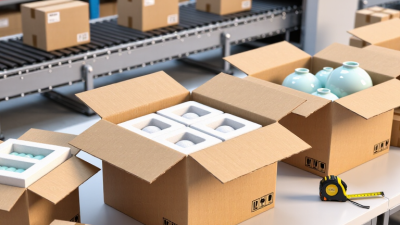
Custom-size shipping boxes help businesses match packaging to the product, rather than filling empty space with extra paper or air pillows. A snug fit can reduce movement in transit and make parcels easier to stack in a storeroom. Small details matter: a box sized for a ceramic mug, for example, needs room for a protective insert but not a large empty corner. Fit is not the only factor. Wall strength, sealing method, and the item’s weight still determine whether a box performs well.
The scale is significant. Pitney Bowes’ 2024 Parcel Shipping Index reported 21.7 billion U.S. parcels in 2023, underscoring how often packaging moves through delivery networks.
The U.S. Environmental Protection Agency reported that containers and packaging generated 82.2 million tons of municipal solid waste in 2018. That older figure is broad, not specific to shipping boxes, but it shows why material use deserves attention.
Custom dimensions may help limit excess board and void fill; they do not guarantee lower costs or less waste. More box sizes can complicate inventory, and small production runs may cost more per unit. Measure real products, including inserts. Then test a packed box before changing the full order. Small errors travel.
Custom-size shipping boxes work best when their dimensions follow the product, not a standard shelf size. Measure length, width, and height at the widest points, then allow room for protective inserts. A snug fit reduces movement. Too tight, though, can crush corners or complicate packing. For lightweight goods, single-wall corrugated board may be enough; heavier items often need stronger board or double-wall construction. Match flute profile and board strength to product weight, stacking, and shipping distance.
Material choice matters beyond strength. Eurostat reported that 82.5% of paper and cardboard packaging waste was recycled in the EU in 2022. The U.S. Environmental Protection Agency’s 2018 materials report put paper and paperboard recycling at 68.2%. These figures use different regions and methods, so they are not directly comparable. Still, they underline why recyclable fiber choices and minimal coatings deserve attention. Simple, water-based printing can keep surfaces easier to process, though local recycling guidance varies.
Design the box around real packing work. A mailer with tuck-in flaps suits flat products; a regular slotted box is often practical for larger shipments. Consider tape width, label placement, and whether staff can assemble the box quickly. Test a packed sample with the actual cushioning and shipping label. Drop and compression tests reveal issues a clean drawing may miss. One awkward detail: a smaller box can save material, yet leave too little room for protective padding. That trade-off needs a real trial.
Comparing custom-size shipping box suppliers in 2026 takes more than checking the quoted price. Start with the product you actually ship. Measure its length, width, and height, including protective inserts, then ask suppliers how they handle sizing tolerances. A box that is half an inch too roomy can allow movement; one that is too tight may slow packing. Request a physical sample before approving a large order. It is a small step, but easy to skip when deadlines press.
Check what each quote includes. Compare board strength, material type, printing, setup charges, minimum order quantities, and delivery fees. Ask whether the supplier can explain its testing method for boxes carrying your typical shipment weight. Terms like “heavy-duty” are vague without a specification. Also confirm production and shipping timelines, especially for repeat orders. A low unit price may not help if stock arrives after your packing schedule changes.
Look beyond the first shipment. Ask how the supplier manages size revisions, quality issues, and reorders, and get those details in writing. If sustainability matters, request specific material information rather than relying on broad claims. A supplier’s answers should be clear and consistent. Some comparisons still feel imperfect: samples may perform differently when packed at speed, and forecasts can change. Track damage rates and packing time during a trial run, then use those figures to assess the fit.
Choosing a shipping box starts with the item as it will actually be packed. Measure its length, width, and height after adding sleeves, inserts, or protective wrapping. A mug in a molded insert needs different space than the same mug wrapped in paper. Measure the packed item, not the product alone. Too much empty space can let contents shift; a tight fit can crush corners or slow packing.
Consider weight, fragility, and how orders move through your operation. A small, dense product may need stronger corrugated board than a larger, lightweight one. Check the box’s rated limits and your carrier’s current size and weight rules, since fees can depend on both. Test a sample with real packing materials. Close it, handle it, and inspect whether seams stay flat. Small flaws matter.
Custom dimensions can reduce filler and improve shelf storage, but the smallest possible box is not always best. Staff need room to pack consistently, especially during busy periods. I find this easy to overlook on a screen. A box that saves material may still waste time if its flaps resist folding or the product catches at the opening. Keep a few sample sizes nearby, and record packing time and damage reports before committing to a large order.
| Box style | Example inside dimensions (in) | Approx. dimensions (cm) | Suitable products | Selection guidance |
|---|---|---|---|---|
| Small cube | 6 × 6 × 6 | 15.2 × 15.2 × 15.2 | Small accessories, compact gifts, and sample kits | Useful when the product is close to cube-shaped; allow room for protective material. |
| Shallow mailer | 8 × 6 × 2 | 20.3 × 15.2 × 5.1 | Flat accessories, small books, stationery, and thin packaged goods | A low profile can reduce unused space; check product thickness and closure clearance. |
| Small rectangular box | 8 × 6 × 4 | 20.3 × 15.2 × 10.2 | Cosmetics, small electronics, and compact retail products | Consider an insert or cushioning for fragile items, and test the packed product before ordering. |
| Medium rectangular box | 12 × 9 × 6 | 30.5 × 22.9 × 15.2 | Apparel bundles, footwear accessories, and multiple small items | A versatile format for mixed orders; use dividers when items need separation. |
| Long rectangular box | 16 × 6 × 4 | 40.6 × 15.2 × 10.2 | Rolled goods, narrow components, and elongated products | Match the box length to the item and protect the ends against movement or impact. |
| Large box | 18 × 14 × 12 | 45.7 × 35.6 × 30.5 | Bulky lightweight goods, household products, and multi-item orders | Check carrier size and dimensional-weight rules; select board strength for the packed load. |
| Custom-fit box | Based on measured product size | Convert each dimension using 1 in = 2.54 cm | Products with unusual shapes or repeatable order dimensions | Measure the packed item, add clearance for cushioning, and confirm whether the supplier specifies inside or outside dimensions. |
Dimensions are illustrative examples, not a universal size standard. Confirm the box’s usable inside dimensions, board grade, closure method, and carrier requirements before placing a production order.