
2026 Top Custom Printed Mailer Box Types for Global Buyers
The 2026 packaging market will demand more than attractive boxes. Global buyers will seek protection, clear branding, efficient shipping, and responsible material choices.
Custom printed mailer boxes are becoming practical brand tools for ecommerce, subscription products, cosmetics, apparel, and small electronics. A strong design can show color accuracy, product details, handling instructions, and opening quality before the customer sees the product. Corrugated mailers suit heavier items. Folding mailers may reduce storage space. Rigid-style mailers create a more premium impression, but they can increase material use and freight costs.
Packaging remains a marketing decision.
Marketing scholar Philip Kotler said, “Packaging is the fifth P of marketing.” His view still matters in 2026. A mailer box protects merchandise, communicates positioning, and shapes the customer’s first physical interaction with a brand. However, printing alone does not guarantee performance. Buyers must review board strength, flute structure, ink quality, closure design, dimensional accuracy, and transit testing.
Small details matter.
A damp warehouse, rough conveyor belt, or oversized box can expose weak planning. Sustainable claims also need evidence, such as recycled content, fiber sourcing, or local recycling guidance. Requirements vary by market, so responsible suppliers should provide clear specifications and compliance documentation.
This guide examines the top custom printed mailer boxes for global buyers in 2026. It compares formats, materials, printing methods, protection levels, customization options, and practical sourcing concerns. Some choices remain imperfect. The cheapest box may create higher replacement costs, while the most luxurious option may waste valuable space.
What Are Custom Printed Mailer Boxes and Why Do Global Buyers Use Them
2026 Top Custom Printed Mailer Box Types for Global Buyers
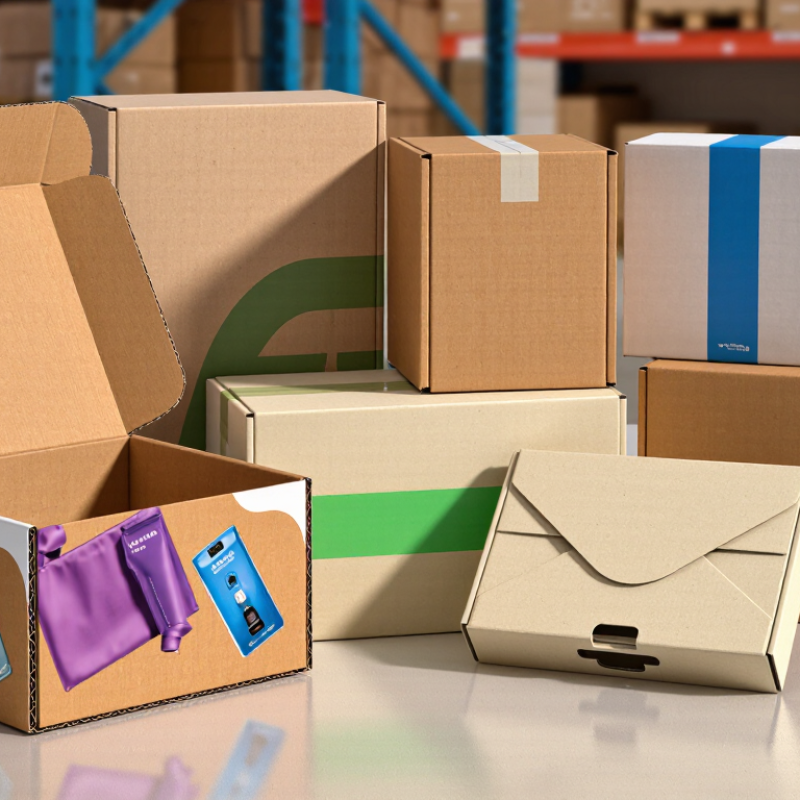
Custom printed mailer boxes are shipping cartons designed to protect products and present a clear visual identity. They usually use corrugated board or strong paperboard. Common structures include roll-end tuck-front, self-locking, and folding mailer boxes. Each format supports different products, weights, and packing speeds.
The Global Parcel Shipping Index 2023 recorded 161.1 billion parcels worldwide in 2022. That volume explains the appeal of compact, protective packaging. A printed mailer box can reduce extra wrapping, show handling information, and create a cleaner unboxing experience. It also gives buyers space for instructions, recycling marks, and product details. Small details matter.
In practical sourcing, I check board strength, crease accuracy, print consistency, and moisture resistance. A beautiful box still fails if its corners collapse during transit. Buyers should request compression tests and sample shipments before approving production. One assumption deserves testing: lighter packaging is not always better. Reducing material too far may increase damage, returns, and hidden costs. For global orders, flat shipping, reliable assembly, and consistent color matching often matter more than decorative effects. Mistakes still happen, especially when artwork crosses languages and measurement systems.
2026 Top Custom Printed Mailer Box Types for Global Buyers
What Are Custom Printed Mailer Boxes and Why Do Global Buyers Use Them?
| Mailer Box Type | Typical Product Fit | Common Board Material | Closure & Protection | Typical Printing | Main Buyer Benefit | Important Buying Consideration |
|---|---|---|---|---|---|---|
| Standard Roll-End Tuck-Top Mailer | Apparel, books, accessories, subscription products and lightweight retail goods | Corrugated fiberboard, commonly E-flute or B-flute | Integrated tuck flaps with roll-end side walls; no separate outer carton normally required | One- to four-color flexographic or offset-printed liner | Efficient assembly, good stacking strength and broad product compatibility | Confirm internal dimensions, board grade and compression performance for the packed product |
| Self-Locking Mailer Box | Direct-to-consumer shipments, small electronics, cosmetics and household items | Single-wall corrugated board, often lightweight E-flute or B-flute | Die-cut locking tabs reduce the need for adhesive during packing | Exterior flexographic printing or litho-laminated graphics | Faster packing workflows and a clean unboxing appearance | Check locking tolerance because board thickness and humidity can affect fit |
| Tear-Strip Return Mailer | Online apparel, footwear, accessories and products with frequent returns | Recyclable corrugated fiberboard with a printed or unprinted inner liner | Factory-applied tear strip plus a second adhesive strip for return shipping | Inside-and-outside printing is available for instructions and brand presentation | Simplifies returns and can reduce the need for replacement shipping cartons | Specify adhesive shelf life, tear-strip placement and return-use testing |
| Premium Rigid-Style Mailer | Premium gifts, beauty sets, fashion accessories and curated subscription boxes | Thick paperboard or rigid board with a wrapped printed paper surface | Magnetic, ribbon or tuck closure; often paired with inserts for presentation | Offset printing with optional matte, gloss or soft-touch coating | Creates a higher-end unboxing experience and supports gift positioning | Rigid formats are heavier and may increase shipping volume and freight cost |
| Kraft Eco Mailer | Organic products, handmade goods, food-related accessories and environmentally positioned retail items | Unbleached kraft corrugated board or recycled fiberboard | Tuck-top or self-locking construction with optional paper padding | Water-based inks, usually in one or two colors for a natural appearance | Supports recyclable packaging goals and uses a distinctive natural surface | Verify recycled content, fiber certification and whether coatings affect recyclability |
| Window Mailer Box | Retail displays, gift sets, stationery, candles and visually distinctive products | Paperboard or corrugated board with a die-cut viewing panel | Tuck or locking closure; window film protects the opening from dust | Full-color offset or digital printing around the window area | Allows product visibility while preserving printed packaging information | Ask whether the window uses recyclable or compostable film and test for scuffing |
| Multi-Depth Adjustable Mailer | Mixed-size products, replacement parts, books and e-commerce order ranges | Scored corrugated board with multiple height-adjustment creases | Tuck closure with adjustable depth; inserts may be added for smaller products | Flexographic or digital printing according to order quantity | Reduces the number of box sizes needed for varied inventories | Compare material savings with the extra board length and confirm crease durability |
| Insulated Mailer Box | Temperature-sensitive food, cosmetics and selected healthcare-related products | Corrugated outer box with paper-based or foam insulation components | Tuck or taped closure with insulated liner and optional coolant pack | Printed outer carton with handling and storage instructions | Helps manage temperature exposure during distribution when properly validated | Packaging performance must be tested for route duration, climate and required temperature range |
| Small-Format Product Mailer | Jewelry, samples, cosmetics, cables and other compact products | Lightweight paperboard or E-flute corrugated board | Compact tuck, tab-lock or peel-and-seal closure | Digital printing for short runs or offset printing for larger quantities | Uses less material and can improve dimensional-weight efficiency | Measure the packed item with protective inserts, not the product alone |
Related Posts
-

China Top Custom Mailer Boxes Supplier for Global Buyers
-
How to Choose Custom Mailer Boxes in 2026?
-

Why Custom Printed Mailer Boxes Are Essential for Your Business Success
-
How to Choose Custom Printed Mailer Boxes for Your Business?
-
Why Choose Custom Size Boxes for Global Shipping?
-

How to Choose the Right Shipping Boxes for Your Business Needs?